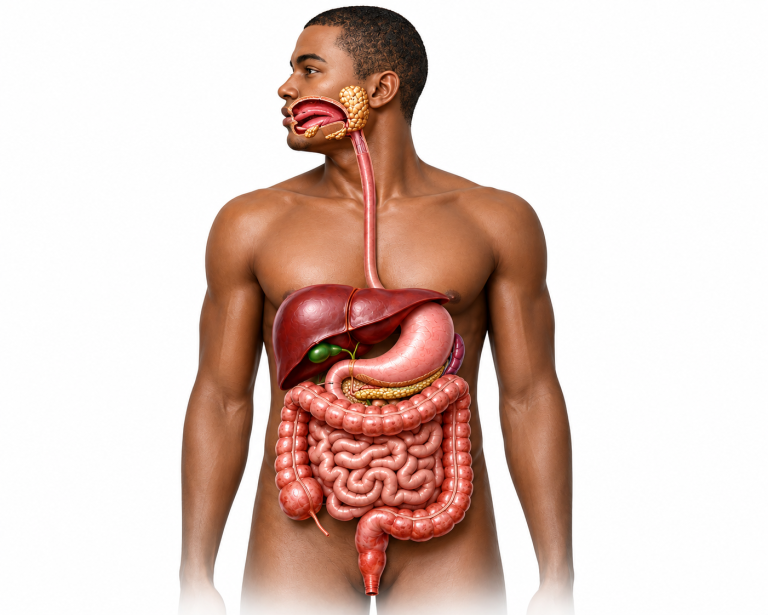

Do Parasite Cleanses Actually Work? Are They FDA Approved?

There is no strong clinical evidence that commercially marketed parasite cleanses can actually work to cure intestinal parasitic infections. This distinction matters because an ingredient can show antiparasitic activity in a laboratory without being proven to safely and effectively treat an infection in humans. Some plants and natural compounds have been investigated for antiparasitic properties. However, laboratory findings should not automatically be interpreted as evidence that a supplement can eradicate a human infection.
Evidence-based treatment is more specific: Depending on the parasite, established medicines may include albendazole, mebendazole, ivermectin, pyrantel pamoate, or praziquantel. The appropriate medication depends on the organism and the patient’s circumstances (Centres for Disease Control and Prevention [CDC], 2024). If you have come across the word “parasite cleanse,” then you have probably seen claims that bloating, constipation, itching anus, or changes in your stool mean you have hidden parasites in the gut that need to be “cleansed.”
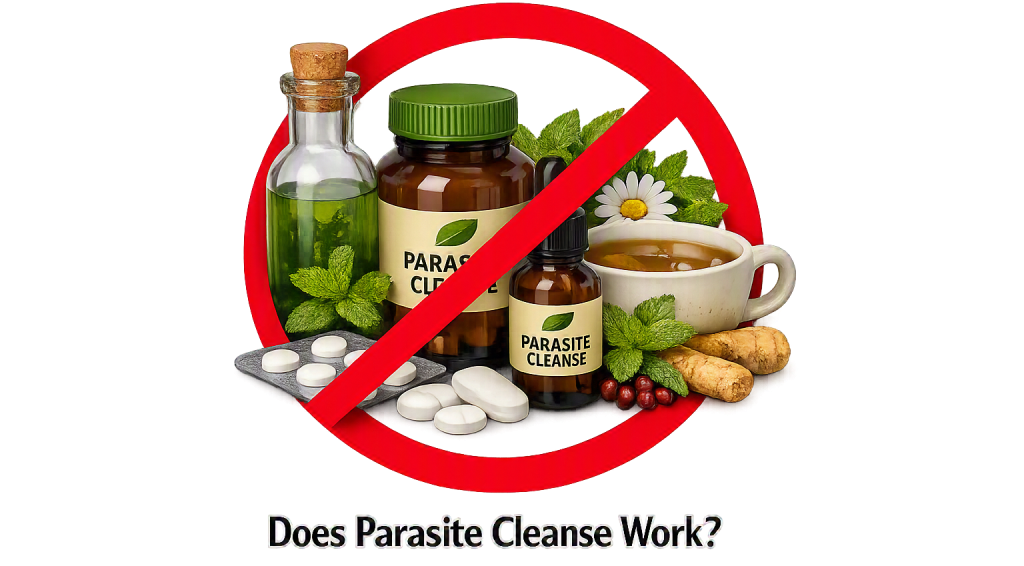
What is a parasite cleanse?
A parasite cleanse is a regimen often made with herbs, supplements, special foods, or dietary changes that is marketed to remove or kill parasites from the body. However, there is limited scientific evidence that commercial parasite cleanses can reliably eliminate parasitic infections, and they should not be considered a substitute for proper diagnosis and medical treatment.
The phrase “parasite cleanse” is not a medical term. It is a wellness term used to describe diets, herbs, supplements, or other regimens promoted as a way to remove intestinal parasites from the body. A parasite infection is a medical condition that needs a healthcare professional to review and prescribe the right medical treatment. Different parasites require different diagnostic tests and treatments. Hence, commercial parasite cleanses, including herbal mixtures, teas, supplements, and restrictive diets, should not be confused with medically established deworming treatment.
These products may contain combinations of herbs, plant extracts, dietary supplements, teas, or fasting regimens. Intestinal parasites are not one single disease. Roundworms, hookworms, whipworms, pinworms, tapeworms, and protozoan parasites are different organisms with different life cycles. For example, the major soil-transmitted helminths include Ascaris lumbricoides, Trichuris trichiura, and hookworms. Their diagnosis, clinical effects, prevention, and treatment are well established in medical literature (World Health Organization [WHO], 2020).
That is why a product claiming to “cleanse all parasites” deserves scepticism.
Evidence-based Parasite treatment
This distinction matters because an ingredient can show antiparasitic activity in a laboratory without being proven to safely and effectively treat an infection in humans.Some plants and natural compounds have been investigated for antiparasitic properties. However, laboratory findings should not automatically be interpreted as evidence that a supplement can eradicate a human infection.
Depending on the parasite, established medicines may include albendazole, mebendazole, ivermectin, pyrantel pamoate, or praziquantel. The appropriate medication depends on the organism and the patient’s circumstances (Centers for Disease Control and Prevention [CDC], 2024).
In other words, the question should not simply be: “What is the strongest parasite cleanse?” It should be: “Could You Have Gut Parasites? and which parasite could it be?”
Could You Have Gut Parasites? Take This Self Check
If you are wondering whether your symptoms or recent exposure could put you at risk for gut parasites, here is a quick self check exposure factors. Important: This is an educational self check, not an intestinal worm test or medical diagnosis. Symptoms alone cannot confirm a parasite infection.
🪱 Gut Parasite
Answer the questions below based on your recent experiences.
🪱 Gut Parasite Exposure Self-Check
Answer step by step. This tool is educational and not a medical diagnosis.
Did you work or play in sand recently?
Are Parasite Cleanses FDA Approved?
No: not as FDA-approved treatments for parasitic infections.
The U.S. Food and Drug Administration (FDA) does not approve dietary supplements for safety and effectiveness before they are marketed. Therefore, a supplement sold as a “parasite cleanse” should not be assumed to have been FDA-approved to eliminate parasites. (U.S. Food and Drug Administration [FDA], 2026a). The FDA has also taken action against parasite-cleanse products. In a 2020 warning letter, the agency identified Humaworm Parasite Cleanse and related products as being marketed with claims to treat or prevent disease. The FDA determined that these claims caused the products to be subject to drug requirements and stated that they were being marketed as unapproved new drugs. (FDA, 2020).
What does this mean?
An online claim such as “FDA approved parasite cleanse” should be treated cautiously. FDA regulation does not mean that a dietary supplement has been tested and proven effective for treating a parasitic infection. If you suspect a real parasitic infection, diagnosis matters. The CDC explains that testing depends on the suspected parasite, symptoms, medical history, and travel history; tests may include stool examinations or blood tests. (Centers for Disease Control and Prevention [CDC], 2024).
Bottom line: A “parasite cleanse” supplement is not the same thing as an FDA-approved treatment for a diagnosed parasitic infection.
What are the symptoms of intestinal parasites?
Symptoms commonly attributed to intestinal parasite infestation, including bloating, constipation, fatigue, abdominal discomfort, diarrhea, nausea, and changes in appetite, can occur with many other conditions.
Therefore, having one or more of these symptoms does not prove that you have intestinal worms.
Some infections produce few or no symptoms, particularly when the parasite burden is low. When symptoms do occur, they depend on the organism and the severity of infection.
Possible symptoms include:
- Abdominal pain or discomfort
- Diarrhea
- Nausea
- Loss of appetite
- Unexplained weight loss
- Fatigue or weakness
- Anemia in some infections
- Anal itching, particularly with pinworm
- Visible worms or worm segments in stool in some infections
Hookworm infection is particularly important because chronic blood loss can contribute to iron-deficiency anemia (WHO, 2020).
Is anal itching a sign of parasites?
Intense itching around the anus at night is a classic symptom of pinworm infection. However, anal itching can also have other causes. The CDC notes that many people with pinworm infection have no symptoms, while perianal itching is the most characteristic symptomatic complaint (CDC, 2024).
What does parasite stool look like?
Mucus, undigested food, vegetable fibers, and other material can sometimes look unusual in stool. Not everything that looks like a worm is a parasite. If you notice something unusual in your stool, take a clear photograph or, when appropriate, bring a specimen to a healthcare professional so he/she can help with identification.
Testing is essential based on the appearance, symptoms, exposure history, and suspected organism
How are intestinal parasites diagnosed?
There is no universal test that detects every intestinal parasite. Diagnosis depends on the suspected infection. For many intestinal parasites, stool examination can be used to look for eggs, larvae, cysts, or other diagnostic stages. Multiple specimens may sometimes be required because parasites are not necessarily detectable in every sample.
The WHO provides diagnostic guidance for identifying intestinal parasites through appropriate laboratory examination (WHO, 2019).
Pinworm is different. For suspected pinworm infection, the CDC recommends the tape test because stool testing is often not sufficiently sensitive for detecting the eggs (CDC, 2024). A proper assessment therefore considers more than symptoms alone:
- Your symptoms and how long they have lasted
- Travel or residence in areas where particular parasites are common
- Food and water exposure
- Sanitation and hygiene circumstances
- Contact with infected people where relevant
- Animal exposure where relevant
- Physical examination
- Appropriate laboratory testing
Parasite cleanse vs. deworming: what is the difference?
Parasite cleanse
Usually refers to a commercial or dietary product marketed as a general method for removing parasites from the body, whiles Deworming refers to the use of established anthelmintic medicines to treat particular worm infections.
For example, albendazole and mebendazole are used against several intestinal worm infections, while other parasites may require different medicines. WHO recommends albendazole or mebendazole in appropriate settings for several soil-transmitted helminth infections (WHO, 2020). The important difference is that medical treatment is directed at a known or suspected organism, rather than assuming that every digestive symptom is caused by parasites.
What actually kills intestinal Parasites?
There is no single medicine that treats every parasite. Treatment depends on the organism. For several soil-transmitted helminth infections, CDC guidance includes medicines such as albendazole, mebendazole, ivermectin, and pyrantel pamoate, depending on the specific worm (CDC, 2024). Pinworm treatment is another good example of why the details matter.
CDC guidance lists mebendazole, pyrantel pamoate, or albendazole for pinworm infection. A second dose is generally recommended two weeks later because these medicines kill worms but do not kill the eggs (CDC, 2024). Tapeworm infections may require a different approach. Praziquantel is the preferred treatment for many cases of taeniasis (CDC, 2024).
So taking a random “strong dewormer” or ” parasite cleanse ” is not necessarily the correct approach.
Can natural remedies kill intestinal parasites?
Some herbs and plant-derived compounds have demonstrated antiparasitic effects in laboratory or experimental research. But does not establish that a particular herbal parasite cleanse can cure a human intestinal infection.
The strength of evidence matters; laboratory experiments, animal studies, traditional use, and randomized clinical trial are not equivalent forms of evidence. If you have a confirmed parasitic infection, relying exclusively on an unproven cleanse could delay effective treatment. This is especially important in children, pregnant people, older adults, and people with significant underlying medical conditions, where treatment decisions may require additional consideration.
Can you prevent intestinal parasites without a cleanse?
Depending on the parasite and local exposure, practical measures include:
- Washing hands thoroughly with soap and water
- Drinking safe water
- Washing or properly cooking food
- Wearing shoes where contaminated soil may be present
- Maintaining adequate sanitation
- Washing bedding and clothing appropriately when treating pinworm
- Following local public-health recommendations for deworming where applicable
WHO identifies sanitation, safe water, hand hygiene, and appropriate food preparation as important components of preventing soil-transmitted helminth infections (WHO, 2020).
When should you see a doctor?
You should consider medical evaluation if you have:
- Persistent diarrhea
- Persistent or significant abdominal pain
- Unexplained weight loss
- Unexplained anemia or weakness
- Persistent anal itching, especially at night
- A persistent change in bowel habits
- A suspected worm or worm segment in your stool
- A relevant history of exposure to contaminated food, water, or soil
Severe abdominal pain, repeated vomiting, gastrointestinal bleeding, severe dehydration, or symptoms suggesting intestinal obstruction require prompt medical attention.
What I would tell a patient asking for a parasite cleanse
If a patient told me, “Doctor, I think I need a parasite cleanse,” I would not immediately recommend a supplement. I would first ask why they suspect a parasite. Do they have a characteristic symptom? Have they had a relevant exposure? Or seen an actual worm? Have they recently travelled? Is there a household contact diagnosed recently with an intestinal worm? Is there another explanation for their symptoms?
If the history suggests a parasitic intestinal infection, the next step may be appropriate testing or targeted treatment. If the symptoms are nonspecific and there is no meaningful exposure history, I would look for other causes.
Bottom line: Should you take a parasite cleanse?
Commercial parasite cleanses have not been adequately demonstrated to reliably eradicate intestinal parasites. If you genuinely suspect a parasitic infection, the sensible approach is to establish whether an infection is present, identify the likely organism when possible, and use treatment appropriate for that infection.
Parasites are real. “Parasite cleansing” is not the same thing as medically treating a parasitic infection.
References
Centres for Disease Control and Prevention. (2024). Clinical care of soil-transmitted helminths. https://www.cdc.gov/sth/hcp/clinical-care/index.html
Centers for Disease Control and Prevention. (2024). Clinical overview of pinworm infection. https://www.cdc.gov/pinworm/hcp/clinical-overview/index.html
Centers for Disease Control and Prevention. (2024). Clinical treatment of taeniasis. https://www.cdc.gov/taeniasis/hcp/clinical-care/index.html
World Health Organization. (2019). Bench aids for the diagnosis of intestinal parasites. World Health Organization. https://www.who.int/publications-detail-redirect/9789241515344
World Health Organization. (2020). Soil-transmitted helminth infections. World Health Organization. https://www.who.int/news-room/questions-and-answers/item/soil-transmitted-helminths
Centers for Disease Control and Prevention. (2024, April 9). Diagnosis of parasitic diseases. CDC. CDC — Diagnosis of Parasitic Diseases
U.S. Food and Drug Administration. (2020, April 20). Humaworm—593083. FDA. FDA — Humaworm warning letter
U.S. Food and Drug Administration. (2026a). Information for consumers on using dietary supplements. FDA. FDA — Dietary Supplements
U.S. Food and Drug Administration. (2026b). Is it really “FDA approved”? FDA. FDA — Is It Really “FDA Approved”?