
Can Probiotics Cause Constipation? Latest Evidence.

Key Takeaways
- Yes, constipation can occur while taking a probiotic, but there is no strong evidence that probiotics commonly cause constipation, and the frequency and typical duration are not well established.
- If constipation begins after starting a probiotic, the timing alone does not prove the probiotic caused it. The specific strain, dose, formulation, diet, medications and other factors matter.
- Some clinical trials and meta-analyses have found that certain probiotics can improve stool frequency, stool consistency or gut transit. However, the results vary across strains, and the certainty of the evidence is not always high.
- Persistent or severe constipation should not simply be blamed on a probiotic. If it continues, the underlying cause deserves attention.
Can probiotics cause constipation?
Possibly, but it appears to be uncommon, and the evidence for probiotics directly causing constipation is surprisingly thin. This is one of those questions where a simple yes-or-no answer can be misleading.
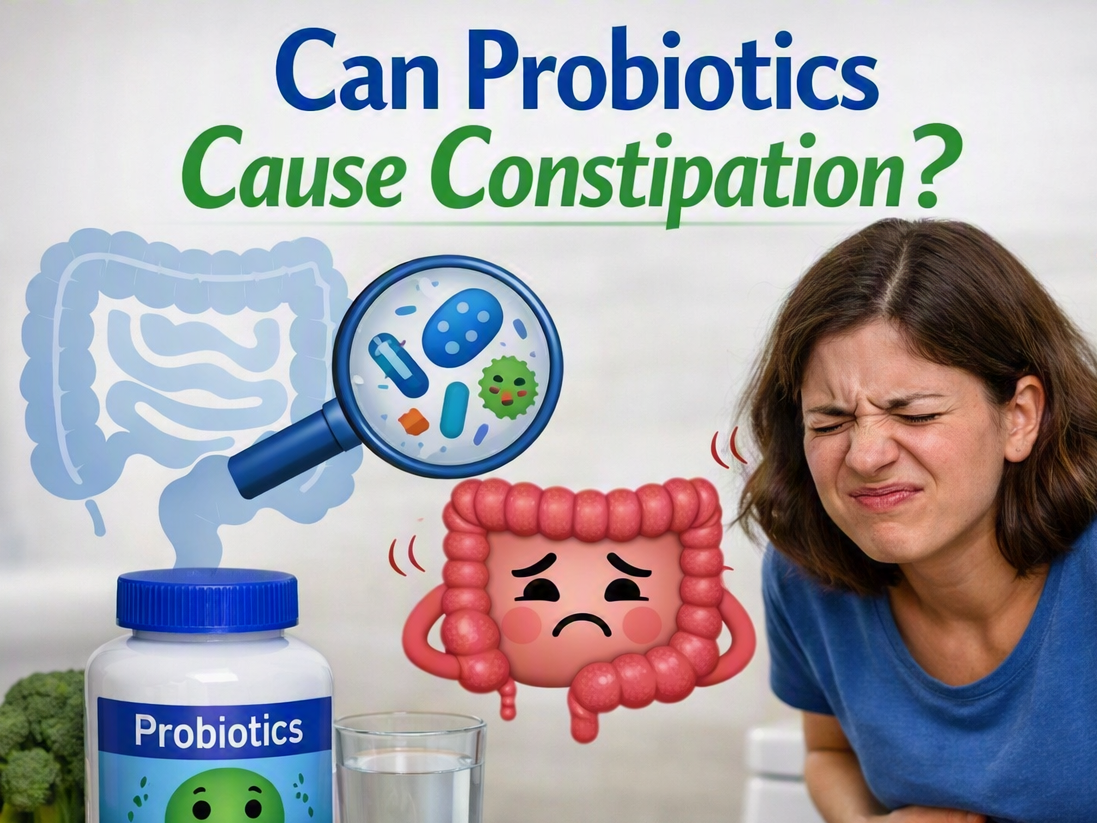
If someone starts a probiotic on Monday and becomes constipated later that week, it is perfectly reasonable to wonder whether the supplement is responsible. But the fact that one event happened after another does not establish causation.
That distinction is particularly important with probiotics because “probiotic” is not one treatment. Different products contain different microorganisms, strains, combinations and doses. The American Gastroenterological Association (AGA) has specifically emphasized that probiotic evidence needs to be considered according to the individual strain or formulation rather than treating all probiotics as interchangeable (Su et al., 2020).
What research says about Probiotics
A person can experience constipation while taking a probiotic, but current evidence does not support describing constipation as a common side effect of probiotics.
And there is an interesting reason for that conclusion: If probiotics commonly caused constipation, we would expect clinical trials to show more constipation among people taking them consistently.
So, looking at various research previously done, probiotics have repeatedly been investigated as potential treatments for constipation rather than causing constipation.
Here is a systematic review and meta-analysis of 14 randomized controlled trials involving 1,182 adults with functional constipation that found that probiotics, overall, reduced whole-gut transit time by about 12.4 hours and increased stool frequency by about 1.3 bowel movements per week. The effects were not identical across strains, but for sure it tells us it help in increasing bowel movements and perhaspe help to ease the gut rather than cause constipation (Dimidi et al., 2014).
A later systematic review of 21 studies involving 2,656 adults with constipation also found an increase in weekly stool frequency with probiotic-containing products, although the studies showed substantial heterogeneity and evidence of publication bias (Miller et al., 2017).
That does not prove that probiotics cannot cause constipation. But it rather does tell us something important: Clinical research has more often investigated certain probiotics as potential treatments for constipation than as causes of new-onset constipation.
How Soon Can Probiotics Cause Constipation?
One question that often follows “Can probiotics cause constipation?” is “How soon would it happen?”
Unfortunately, clinical research does not give us a reliable answer such as within 3 days, 1 week, or 2 weeks. Studies of probiotics have generally not been designed to establish a specific onset period for probiotic-induced constipation. Therefore, if constipation begins a few days after starting a probiotic, the timing is worth noting, but it does not prove that the probiotic caused it.
What makes the probiotic a more likely cause?
The connection becomes more convincing when the timeline is consistent:
- bowel movements were normal before starting the product;
- constipation began after introducing the probiotic;
- no major diet, fluid, medication or lifestyle changes occurred at the same time;
- symptoms improve after the product is stopped; and
- similar symptoms return if the same product is restarted.
Even this pattern does not prove causation in the way a controlled clinical trial would. It simply makes the probiotic a more reasonable suspect.
Is there a 1–3 week adjustment period?
You may see websites claiming that constipation caused by probiotics normally lasts one to three weeks while the gut microbiome “adjusts.” However, a universal 1–3 week timeframe for probiotic-related constipation has not been established by clinical research.
That does not mean temporary digestive changes cannot occur after starting a probiotic. It means we should not present a specific duration as a proven rule when the evidence does not establish one. If constipation is mild and temporary, monitoring the symptoms and reviewing other possible causes may be reasonable.
A useful way to judge the timing
Think of the timeline as evidence to consider, not proof of cause: Started probiotic → constipation followed → possible association
Is different from:
Started probiotic → constipation followed → therefore probiotic caused constipation.
That distinction is especially important because most published probiotic research has focused on whether particular strains or formulations can improve constipation-related symptoms, rather than determining how often probiotics cause new-onset constipation.
Bottom line: If constipation starts shortly after beginning a probiotic, it is reasonable to consider the product as a possible contributor. But there is currently no established number of days or weeks that can reliably be called “probiotic-induced constipation.”
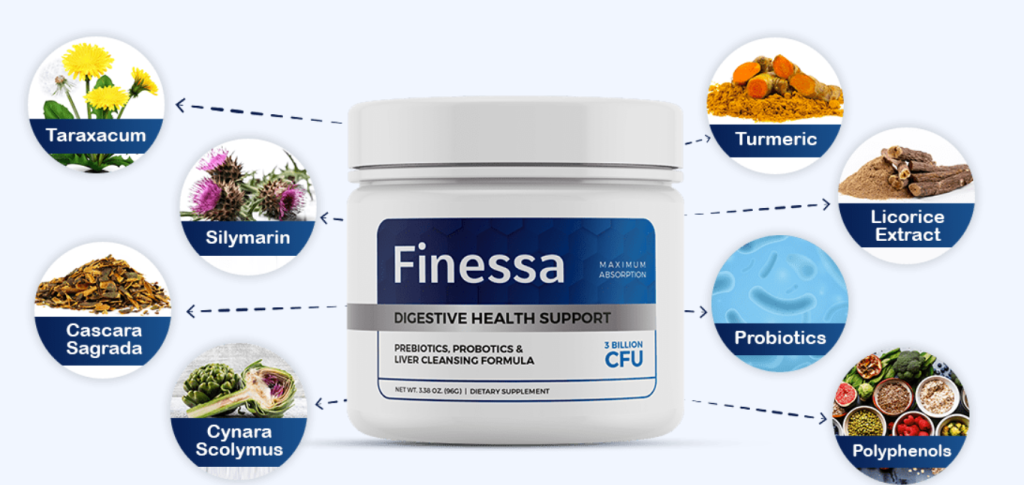
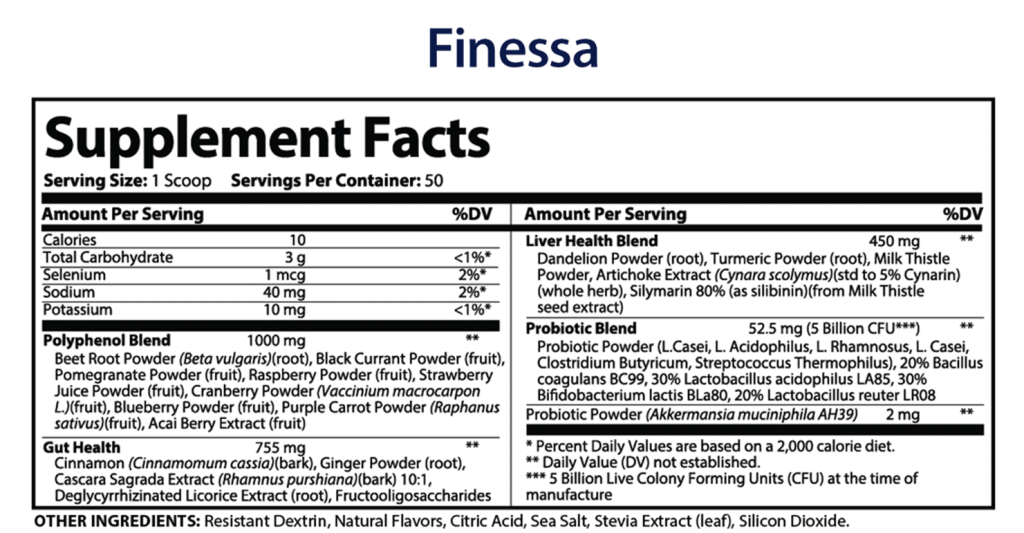
Example of a Probiotic
How common is constipation from probiotics?
We don’t have a reliable percentage. This is an important limitation.
There are many studies examining probiotics for digestive conditions, but relatively few are specifically designed to measure new-onset constipation caused by probiotics. “The safest evidence-based answer is that constipation appears to be uncommon, but its exact frequency is not well established.“
That distinction is worth making because an absence of good reports is not the same thing as proof that an adverse effect never occurs.
Is constipation a normal “adjustment” to probiotics?
There may be some truth to the broader idea that digestive symptoms can change after starting a probiotic. However, I would be careful about using “adjustment” as an explanation for persistent constipation. Additionally, many people tend to post in social groups on TikTok, saying, “Your gut is adjusting to the new bacteria” hence the constipation.
The NIH Office of Dietary Supplements says that probiotics can cause minor gastrointestinal symptoms such as gas and that these effects are generally self-limited. It does not identify constipation as a common adverse effect.
That matters; We should not turn an unexplained symptom into a confident biological explanation simply because it sounds plausible. There is currently not enough evidence to tell every person with constipation after starting a probiotic: “This is just your microbiome adjusting, so wait a few weeks.”
If the symptom persists, other explanations need to be considered, and a medical check-up may be appropriate.
Why specific probiotic matters
One common mistake in probiotic discussions is treating all products as though they are identical. They are not.
A probiotic label may contain a genus, species and strain: for example, Bifidobacterium longum followed by a specific strain designation. Another product may contain several different organisms.
The AGA’s probiotic guideline deliberately evaluates individual single-strain and multi-strain formulations rather than treating probiotics as one category with one predictable effect (Su et al., 2020).
This is an important principle for anyone reviewing a probiotic’s effect on gut health. Evidence for one strain should not automatically be transferred to another strain.
The same applies to dose and formulation. A product containing several organisms and additional ingredients is not necessarily equivalent to a single-strain product simply because both are marketed as “probiotics.”
Don’t forget the rest of the product
There is another reason it can be difficult to blame constipation on the probiotic organisms themselves. Some supplements contain more than microorganisms. Depending on the product, the formulation may contain fibers, prebiotics, sweeteners, minerals, herbs or other ingredients.
If constipation starts after taking a complex “gut health” supplement, looking only at the probiotic strains may therefore miss part of the picture. Before deciding that the bacteria caused the problem, look at the entire label.
Could something else be causing the constipation?
Absolutely. If constipation starts around the same time as a probiotic, consider what else changed.
For example:
- Did your diet change?
- Are you eating less fiber?
- Are you drinking less fluid?
- Have you become less physically active?
- Did you start another supplement?
- Did you start a medication that can cause constipation?
- Were you already having irregular bowel movements?
The AGA/ACG guideline for chronic idiopathic constipation recognizes a range of evidence-based treatments and emphasizes that constipation management requires consideration of the individual’s circumstances rather than relying on one intervention for everyone (Chang et al., 2023).
Can probiotics actually help constipation?
Some may help with constipation relief. But that does not mean every probiotic will.
A 2022 systematic review and meta-analysis examined 10 randomized controlled trials involving 757 patients with constipation-predominant IBS.
Compared with placebo, probiotics significantly improved stool consistency. However, the authors rated the certainty of the evidence as low and found no significant difference in the incidence of adverse events between probiotic and placebo groups (Shang et al., 2022).
Another meta-analysis of 17 randomized controlled trials involving 1,469 patients with constipation-predominant IBS found that probiotics increased stool frequency and improved stool consistency, with no serious adverse events reported. However, the authors also concluded that more research was needed to establish which species, strains, doses and treatment durations were most useful (Zhang et al., 2020).
So there is a genuine scientific paradox here:
A person can become constipated while taking a probiotic, while some probiotics are simultaneously being studied as treatments for constipation.
What Newer Research Shows
More recent clinical trials reinforce why probiotic effects should not be generalized across all strains. In a 2024 randomized clinical trial involving 229 adults with functional constipation, Bifidobacterium animalis subsp. lactis HN019 did not significantly outperform placebo in increasing complete spontaneous bowel movements (cheng et al., 2024).
A separate 2025 multicenter, triple-blind randomized trial also found that HN019 was not superior to placebo for functional constipation, although no safety concerns related to supplementation were identified (Ala-Jaakkola et al., 2025). These findings suggest that even probiotics studied for constipation relief do not consistently produce the same effects.
5 things to do when you have constipation after starting a probiotic?
If the constipation is mild and you otherwise feel well, start by looking at the basics.
- Check your fluid intake: Dehydration can contribute to harder stools. Make sure you are drinking enough fluid for your individual needs, particularly if your diet or activity level has changed.
- Look at your fiber intake: A sudden reduction in dietary fiber can contribute to constipation. Good sources include vegetables, fruits, whole grains, legumes, nuts and seeds. However, increasing fiber very rapidly can also worsen bloating and gas in some people. Increase it sensibly rather than assuming that more is always better. For chronic idiopathic constipation, the joint AGA/ACG guideline recommends or suggests several established treatment options, including fiber and other pharmacological therapies depending on the clinical situation (Chang et al., 2023).
- Keep moving: Regular physical activity can support normal bowel function. A daily walk is a reasonable starting point for many people.
- Review the probiotic. Write down: the exact product, the strains, the dose, when you started it, when the constipation began, other supplements or medications you started around the same time. That information can help determine whether there is a convincing temporal relationship.
- Don’t automatically increase the dose: If a probiotic appears to be causing digestive symptoms, taking more of it is not a sensible way to test whether it will work better. There is no general rule that a higher CFU count means a better clinical outcome.
Should you stop taking the probiotic?
There is no major gastroenterology guideline that tells everyone to stop probiotics simply because constipation occurs.
The available AGA guidance focuses on whether particular probiotic strains or combinations have evidence for particular gastrointestinal conditions. It does not identify constipation as a general probiotic adverse effect requiring routine avoidance.
If constipation is mild, you can discuss the product and your symptoms with a healthcare professional. If symptoms are significant, persistent or clearly worsening after starting the product, it is reasonable to reassess whether you need that particular supplement rather than simply continuing indefinitely.
And I would not describe persistent constipation as a “detox.”There is no good evidence that constipation means your body is removing toxins because a probiotic is working.
When constipation probably deserves another explanation
A probiotic becomes a less convincing explanation when:
- constipation existed before the probiotic
- there was a major dietary change
- fluid intake decreased
- activity decreased
- another medication was started
- constipation persists despite stopping the product
- there are recurrent episodes unrelated to probiotic use
Constipation can have many causes, and persistent symptoms should be assessed accordingly.
When should you see a doctor?
Do not assume that constipation is harmless simply because you are taking a supplement.
Seek medical evaluation if constipation is persistent, severe, or accompanied by concerning symptoms such as:
- blood in the stool
- unexplained weight loss
- significant abdominal pain
- repeated vomiting
- marked abdominal swelling
- inability to pass stool or gas
- a significant new change in bowel habits
The question of whether a probiotic caused the constipation becomes secondary if there are warning signs that require medical assessment.
Are probiotics generally safe?
For healthy people, probiotics generally have a good safety record.
The NIH Office of Dietary Supplements states that probiotics are unlikely to cause harm in healthy people and that reported side effects are usually minor gastrointestinal symptoms such as gas. Rare serious infections have been reported, particularly among people who are severely ill or immunocompromised (NIH ODS, 2025).
That does not mean every probiotic is appropriate for every person. People who are seriously ill or immunocompromised should discuss probiotic use with their healthcare professional rather than assuming that a product marketed as “natural” is automatically risk-free.
Frequently Asked Questions
- Can probiotics cause constipation?
- Possibly, but constipation is not established as a common side effect of probiotics overall. Published evidence directly demonstrating probiotic-induced constipation is limited.
- Why did I become constipated after starting probiotics?
- The probiotic may be involved, but timing alone does not establish causation. Diet, fluid intake, activity, medications, other ingredients in the supplement and underlying bowel problems should also be considered.
- How long does constipation from probiotics last?
- There is no scientifically established duration. Research is insufficient to say that probiotic-related constipation always resolves within a specific number of days or weeks.
- Can probiotics help constipation?
- Yes, some probiotic preparations have been studied for constipation and have shown improvements in stool frequency, stool consistency or gut transit in some trials. Results vary by strain, and the evidence is not uniformly strong.
- Is constipation a sign that a probiotic is working?
- No. Constipation should not be interpreted as evidence that a probiotic is working.
- Should I stop probiotics if I become constipated?
- There is no universal rule. Consider the severity of the symptoms, why you are taking the product, the exact formulation and other possible causes. Persistent or significant constipation deserves professional assessment.
- Can too many probiotics cause constipation?
- There is insufficient evidence to establish that taking a larger number of probiotic organisms routinely causes constipation. More CFUs do not automatically mean greater benefit.
- Are probiotics safe for everyone?
- No. They are generally considered safe for healthy people, but serious infections have rarely been reported, particularly in severely ill or immunocompromised individuals.
The Bottom Line
Can probiotics cause constipation? Possibly, but the evidence does not show that probiotics commonly cause constipation.
The scientific literature contains surprisingly little direct evidence of probiotics causing new-onset constipation. Most clinical research has actually examined whether certain probiotics can improve constipation. That does not mean a person cannot become constipated after starting one. It means we should be careful about confusing “it happened after I started the probiotic” with “the probiotic caused it.” If constipation develops, look at the complete picture: the exact probiotic strain and formulation, dose, diet, fluid intake, medications, activity and underlying bowel habits. And if the constipation persists, becomes severe or is accompanied by warning symptoms, don’t simply wait for your gut to “adjust.”
References
Chang, L., Chey, W. D., Imdad, A., Almario, C. V., Bharucha, A. E., Diem, S., Greer, K. B., Hanson, B., Harris, L. A., Ko, C., Murad, M. H., Patel, A., Shah, E. D., Lembo, A., & Sultan, S. (2023). AGA-ACG clinical practice guideline: Pharmacological management of chronic idiopathic constipation. Gastroenterology, 164(7), 1086–1106. https://doi.org/10.1053/j.gastro.2023.03.214
Dimidi, E., Christodoulides, S., Scott, S. M., & Whelan, K. (2014). The effect of probiotics on functional constipation in adults: A systematic review and meta-analysis of randomized controlled trials. The American Journal of Clinical Nutrition, 100(4), 1075–1084. https://doi.org/10.3945/ajcn.114.089151
Miller, L. E., Ouwehand, A. C., & Ibarra, A. (2017). Effects of probiotic-containing products on stool frequency and intestinal transit in constipated adults: Systematic review and meta-analysis of randomized controlled trials. Annals of Gastroenterology, 30(6), 629–639. https://doi.org/10.20524/aog.2017.0192
National Institutes of Health, Office of Dietary Supplements. (2025). Probiotics: Fact sheet for consumers. https://ods.od.nih.gov/factsheets/Probiotics-Consumer/
Shang, X., E, F.-F., Guo, K.-L., Li, Y.-F., Zhao, H.-L., Wang, Y., Chen, N., Nian, T., Yang, C.-Q., Yang, K.-H., & Li, X.-X. (2022). Effectiveness and safety of probiotics for patients with constipation-predominant irritable bowel syndrome: A systematic review and meta-analysis of 10 randomized controlled trials. Nutrients, 14(12), 2482. https://doi.org/10.3390/nu14122482
Su, G. L., Ko, C. W., Bercik, P., Falck-Ytter, Y., Sultan, S., Weizman, A. V., & Morgan, R. L. (2020). AGA clinical practice guidelines on the role of probiotics in the management of gastrointestinal disorders. Gastroenterology, 159(2), 697–705. https://doi.org/10.1053/j.gastro.2020.05.059
Zhang, M. M., Qian, W., Qin, Y., He, L., & Chen, B. (2020). Efficacy and safety of probiotics for patients with constipation-predominant irritable bowel syndrome: A systematic review and meta-analysis based on seventeen randomized controlled trials. International Journal of Surgery, 79, 111–119.
Ala-Jaakkola, R., Forssten, S. D., Cheng, J., et al. (2025). Effect of an 8-week Bifidobacterium lactis HN019 supplementation on functional constipation: A multi-center, triple-blind, randomized, placebo-controlled trial. Molecular Nutrition & Food Research, 69(17), e70081. https://doi.org/10.1002/mnfr.70081
Cheng, J., Gao, C., Ala-Jaakkola, R., et al. (2024). Eight-week supplementation with Bifidobacterium lactis HN019 and functional constipation: A randomized clinical trial. JAMA Network Open, 7(10), e2436888. https://doi.org/10.1001/jamanetworkopen.2024.36888