
Why Your Heart Rate May Increase After Stopping Ozempic or Wegovy: A Doctor Explains

A higher heart rate after stopping a GLP-1 medication does not always mean there is a heart problem. Your body may be adjusting to changes in appetite, weight, sleep, metabolism, and daily habits.
The most important thing is the overall pattern — your symptoms, health history, and how you feel.
1. Introduction
2. What Happens When You Stop a GLP-1 Medication?
3. Why Does My Resting Heart Rate Increase After Stopping Ozempic?
4. Why Did My HRV Drop After Stopping Wegovy?
5. How Long Does This Adjustment Last?
6. 5 Things That May Help Your Body Adjust
7. When Should You Contact a Doctor?
8. Frequently Asked Questions
9. Final Thoughts
10. Medical References and Sources
Stopping GLP-1 Medication
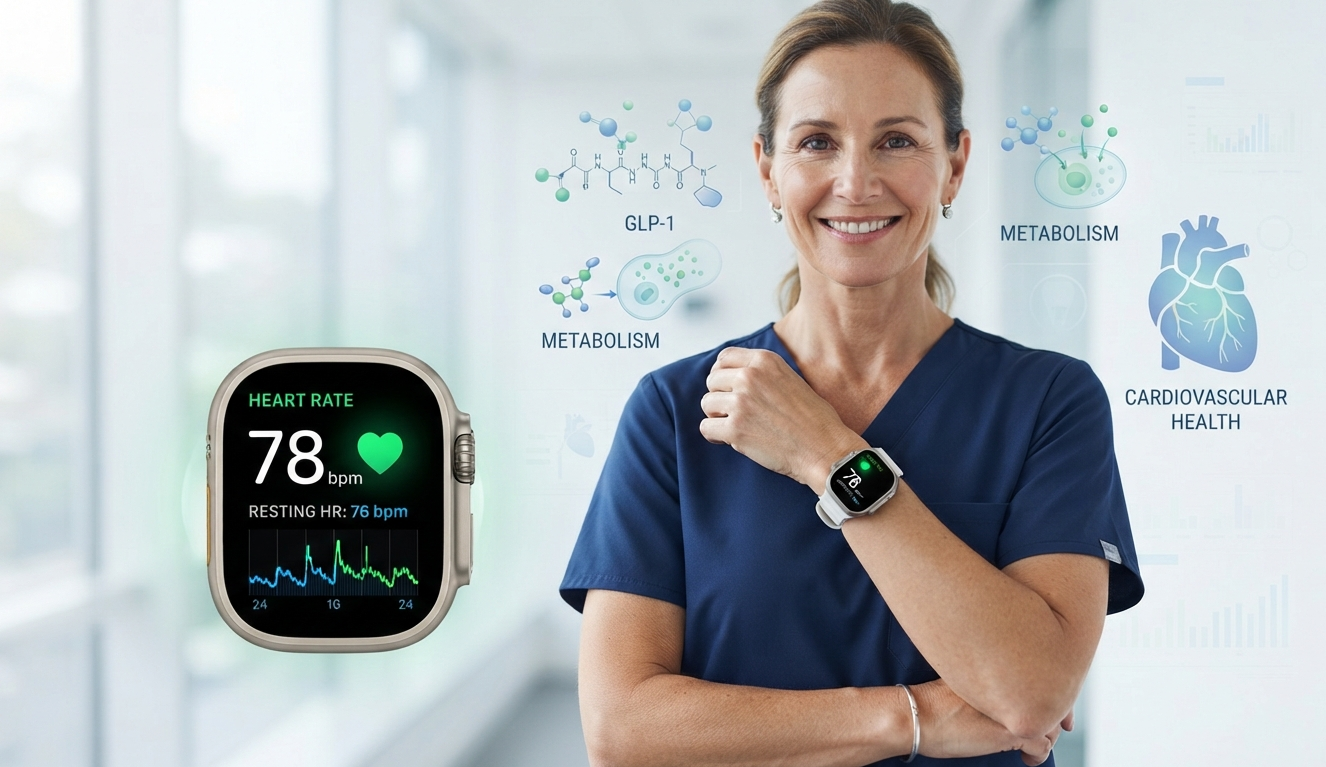
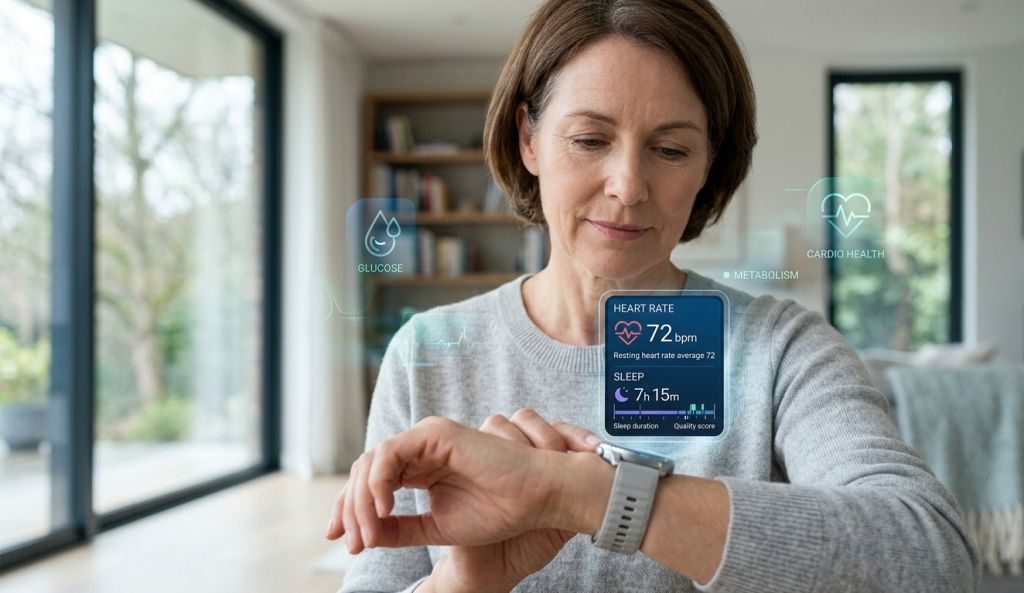
If you recently stopped taking Ozempic, Wegovy, or another GLP-1 medication, you may have noticed something unusual: your smartwatch shows a higher resting heart rate, lower HRV, or a poorer recovery score.

Naturally, this can be worrying.
Many people immediately ask:
“Is something wrong with my heart?”
In most cases, a small change in wearable data does not mean there is a dangerous problem. Your body may simply be adjusting to life without the medication.
Your smartwatch can detect changes, but it cannot explain the reason behind them.
Let’s look at what may be happening.
What Happens When You Stop a GLP-1 Medication?
GLP-1 medications such as semaglutide (Ozempic and Wegovy) affect several systems in your body.
They influence:
- Appetite
- Digestion
- Blood sugar control
- Weight regulation
- Metabolism
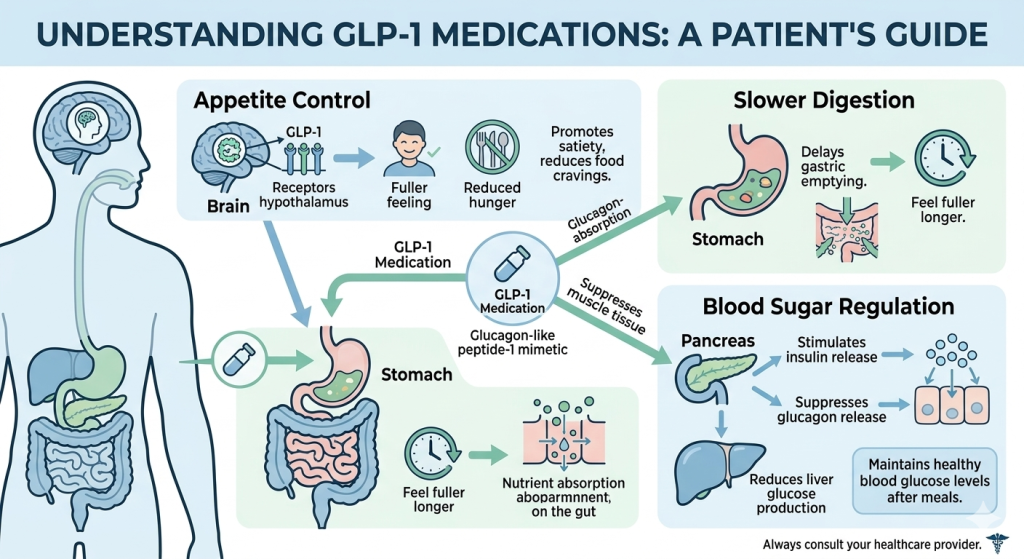
When you stop taking them, these effects gradually wear off. Your appetite may return, your gut behavior may change. Your body may begin adjusting its energy balance again.
These changes can sometimes appear on wearable devices.
Why Does My Resting Heart Rate Increase After Stopping Ozempic?
There is no single reason. Several small changes may happen at the same time.
1. Your Body Is Adjusting
Your nervous system helps control your heart rate automatically.
Changes in medication, weight, sleep, stress, and metabolism can affect this system.
During this adjustment period, some people notice their resting heart rate is slightly higher than before.
2. Your Sleep May Change
Sleep has a major effect on heart rate.
After stopping a GLP-1 medication, some people notice:
- More nighttime hunger
- Changes in sleep patterns
- More waking during the night
Even small sleep disruptions can lower HRV and increase overnight heart rate readings.
3. Your Eating Habits May Be Different
GLP-1 medications often reduce appetite.
After stopping, hunger signals may become stronger.
Some people eat larger meals, especially later in the day. Heavy evening meals can affect digestion, sleep quality, and overnight heart rate.
- Chest pain
- Shortness of breath
- Fainting
- New irregular heartbeat
- Persistent symptoms
Why Did My HRV Drop After Stopping Wegovy?
Heart Rate Variability (HRV) measures the natural variation between heartbeats.
It is influenced by many things, including:
- Sleep quality
- Stress
- Exercise
- Hydration
- Illness
- Recovery
A lower HRV after stopping a GLP-1 medication does not automatically mean your heart is unhealthy.
Think of HRV as a “stress and recovery signal” rather than a direct measure of heart disease.
How Long Does This Adjustment Last?
Everyone is different.
Some people notice changes for a few weeks. Others may take longer depending on:
- How long they used the medication
- Their dose
- Weight changes
- Activity level
- Sleep quality
- Overall health
The important thing is to look at the overall pattern rather than one smartwatch reading.
5 Things That May Help Your Body Adjust
1. Prioritize Protein

Protein helps maintain muscle and supports healthy metabolism.
Try including protein in meals such as:
- Eggs
- Fish
- Beans
- Chicken
- Yogurt
- Tofu
2. Stay Hydrated
Dehydration can increase heart rate.
Drink enough water throughout the day, especially if you exercise or live in a hot environment.
3. Exercise Consistently
You do not need extreme workouts.
Simple habits like:
- Walking
- Strength training
- Cycling
- Regular movement
can support cardiovascular health.
4. Improve Sleep Quality
Small improvements can help:
- Keep a regular bedtime
- Avoid heavy meals close to sleep
- Reduce late-night screen exposure
5. Do Not Panic Over Your Watch
Wearables are useful tools, but they are not doctors.
A single unusual reading does not tell the whole story.
Always consider:
- How you feel
- Your symptoms
- Your medical history
When Should You Contact a Doctor?
Speak with a healthcare professional if you have:
- Chest pain
- Difficulty breathing
- Fainting
- Severe dizziness
- New irregular heartbeat sensations
- A consistently high resting heart rate that continues
Frequently Asked Questions
Can stopping Ozempic increase heart rate?
Yes, some people notice changes in resting heart rate after stopping GLP-1 medications. This may relate to changes in metabolism, weight, sleep, hydration, and lifestyle.
Is a resting heart rate of 80 dangerous?
Not necessarily. A resting heart rate of 80 beats per minute is normal for many adults. The important factor is whether it is a major change from your usual baseline and whether you have symptoms.
Does stopping Wegovy cause withdrawal symptoms?
GLP-1 medications do not usually cause traditional withdrawal symptoms, but your body may experience adjustment changes as appetite, digestion, and metabolism return toward their previous state.
Can a smartwatch diagnose heart problems?
No. Smartwatches can identify patterns but cannot replace medical evaluation.
Should I restart Ozempic because my heart rate changed?
Do not restart or change medication without discussing it with your healthcare provider.
Final Thoughts
Stopping a GLP-1 medication is a significant change for your body.
If your smartwatch shows a higher heart rate or lower HRV, try not to panic.
Look at the bigger picture: your symptoms, lifestyle, sleep, activity level, and overall health.
Your wearable is a helpful tool, but your health is more than a number on a screen.
Medical Disclaimer:
This article is for educational purposes only and does not replace personalized medical advice. Always consult your healthcare professional before changing medications.
Visit Health & BestTips for more info
Medical References and Sources
The following references support the information discussed in this article. These are reliable medical sources that readers and search engines can use to verify the information.
References
1. GLP-1 Receptor Agonists and Cardiovascular Effects
Marso SP, Daniels GH, Brown-Frandsen K, et al.
Liraglutide and Cardiovascular Outcomes in Type 2 Diabetes.
New England Journal of Medicine. 2016.
This landmark clinical trial examined cardiovascular outcomes associated with GLP-1 receptor agonist therapy.
Reference:
https://www.nejm.org/doi/full/10.1056/NEJMoa1603827
2. Semaglutide and Cardiovascular Outcomes
Lincoff AM, Brown-Frandsen K, Colhoun HM, et al.
Semaglutide and Cardiovascular Outcomes in Obesity without Diabetes.
New England Journal of Medicine. 2023.
This study evaluated cardiovascular outcomes among adults with overweight or obesity receiving semaglutide.
Reference:
https://www.nejm.org/doi/full/10.1056/NEJMoa2307563
3. Weight Changes After Stopping Semaglutide
Wilding JPH, Batterham RL, Davies M, et al.
Weight regain and cardiometabolic effects after withdrawal of semaglutide.
Diabetes, Obesity and Metabolism. 2022.
This study examined what happens after stopping semaglutide, including changes in body weight and metabolic markers.
Reference:
https://dom-pubs.onlinelibrary.wiley.com/
4. Heart Rate Variability and Autonomic Nervous System Function
Shaffer F, Ginsberg JP.
An Overview of Heart Rate Variability Metrics and Norms.
Frontiers in Public Health. 2017.
This review explains HRV, what it measures, and why it changes with stress, sleep, and health conditions.
Reference:
https://www.frontiersin.org/articles/10.3389/fpubh.2017.00258/full
5. Wearable Devices and Health Monitoring
Bent B, Goldstein BA, Kibbe WA, Dunn JP.
Investigating sources of inaccuracy in wearable optical heart rate sensors.
NPJ Digital Medicine. 2020.
This paper discusses wearable heart rate technology and its limitations.