
Emma Gut Health Reviews: Latest | All You Need To Know (2026)

Table of Contents Tap to open table
Lately, I see questions about Emma, a gut supplement: “Does it actually work?” and is it worth taking it. In this review, we cover a lot of curious questions about the Emma Gut supplement that you need to know.
What is Emma?
Emma is a supplement produced by Enclave Bioactives, a nutraceutical research company headquartered in New York, USA. The supplement was launched with the determination to create a gut health solution that works beyond probiotics and laxatives.
Emma is marketed around several common digestive concerns, including constipation, bloating and digestive discomfort. Its current formula contains a combination of plant-derived compounds and other ingredients, including berberine, quercetin, resveratrol, deglycyrrhizinated licorice (DGL), star anise and chicory-root inulin.
The formula is certainly interesting. But interesting is not the same as proven. That distinction is important when evaluating any supplement.
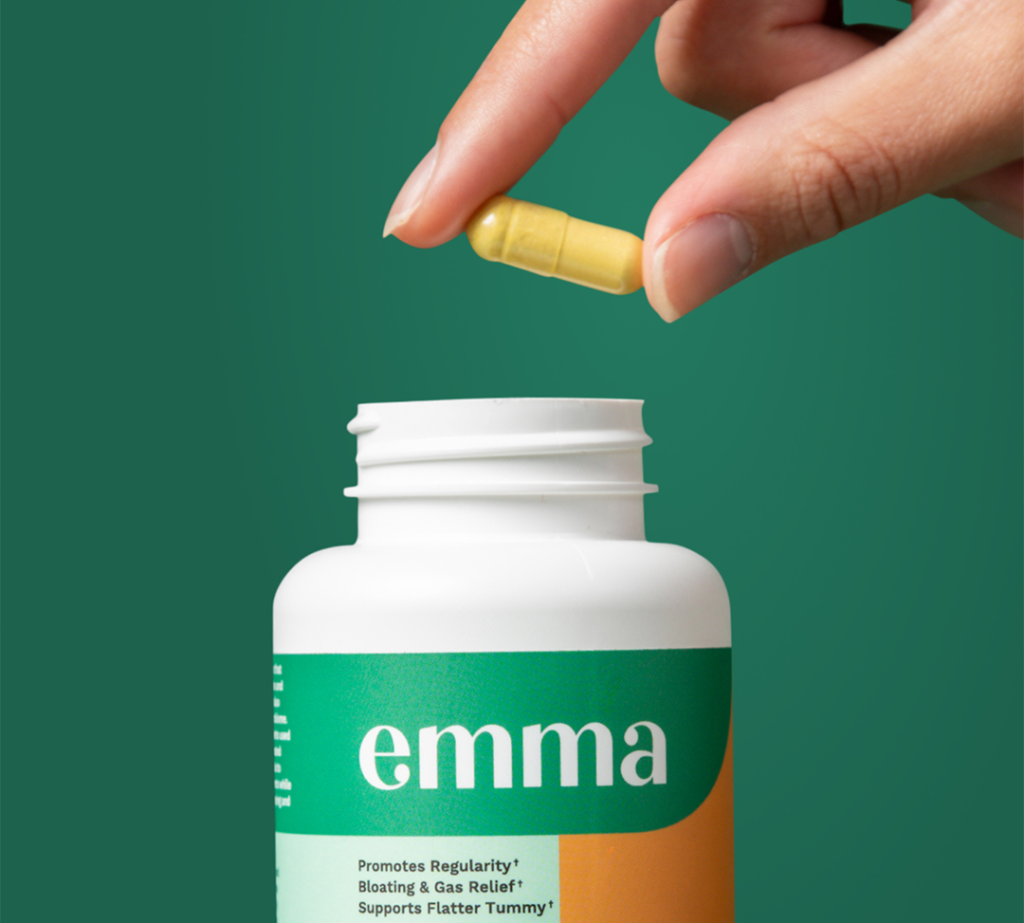
Emma Gut Health
Some of the individual ingredients have scientific literature behind them, while others have more limited human evidence.
What caught my attention about Emma?
The formula is more complicated than the typical “take a probiotic” supplement. Emma’s current product information lists some ingredients that are described as supporting the gut environment rather than simply adding probiotic bacteria.
The current formula contains several plant-derived compounds, botanical extracts and prebiotic fibers, including berberine, quercetin, resveratrol, DGL, star anise, chicory-root inulin and larch arabinogalactan. Some of these compounds have genuinely interesting biological and clinical research behind them. However, some of this ingredient has been studied in a randomized clinical trial at a particular dose, and findings suggested that you cannot guarantee that a particular dose will provide similar results as in a supplement; hence, results may differ. This is one of the easiest details to miss when reading supplement advertisements.
Emma ingredients with scientific support?
Does Emma have an ingredient with scientific support? Yes, here is some basic information about the ingredients in Emma:
Berberine
What it is: A plant compound studied for metabolic health and its effects on the gut microbiome.
Potential benefits: Human studies suggest berberine may influence blood glucose, cholesterol and gut microbial composition. However, the evidence is mainly from metabolic conditions, not from trials proving that Emma itself improves gut symptoms.
Mostly found in: Berberis species, goldenseal, Oregon grape and related plants.
The evidence: A 2026 systematic review of randomized trials found that berberine can alter gut microbiota, but the authors noted that the findings are still heterogeneous and do not prove that microbiome changes directly cause clinical benefits (Candrea et al., 2026).
Chicory-Root Inulin
What it is: A fermentable dietary fiber and prebiotic.
Potential benefits: Inulin can support the growth of certain beneficial gut bacteria, particularly Bifidobacterium. It may also help bowel regularity in some people.
Mostly found in: Chicory root, onions, garlic, leeks, asparagus and Jerusalem artichokes.
Because gut bacteria ferment inulin, some people may experience gas, bloating or abdominal discomfort, especially with larger amounts. Human studies consistently show that inulin can change gut microbiota, but the health effects are not identical in everyone (Vandeputte et al., 2020; Hughes et al., 2022).
DGL (Deglycyrrhizinated Licorice)
What it is: Licorice extract with most of the glycyrrhizin removed.
Potential benefits: DGL has been investigated for digestive and upper-GI symptoms, including reflux-related discomfort.
Mostly found in: The root of Glycyrrhiza glabra (licorice).
Why the “DGL” matters: Ordinary licorice contains glycyrrhizin, which can cause problems such as fluid retention and changes in blood pressure when consumed in significant amounts. DGL preparations are designed to contain much less glycyrrhizin.
Star Anise
What it is: A spice traditionally used in food and herbal preparations.
Potential benefits: Star anise contains aromatic compounds that have been investigated for digestive and other biological effects.
Mostly found in: The fruit of Illicium verum.
Important: The evidence for digestive benefits in humans is more limited than for some of the better-studied ingredients in Emma
Larch Arabinogalactan
What it is: A soluble fiber derived from larch trees.
Potential benefits: It has prebiotic properties and may influence the gut microbiome.
Mostly found in: The wood of larch trees.
Emma real customers’ reviews?
Customer experiences are mixed, which is actually more useful than pretending everyone has the same result. Some consumers report improvements in bloating, others in bowel regularity or general digestive comfort. Some report little noticeable change.
I would not use these groups as proof that Emma works or that it doesn’t. Customer reviews can tell us what people are experiencing. They cannot replace a randomized controlled trial below is a few examples of what I found customers saying about Emma gut supplement.
Emma Gut Health – Trustpilot Reviews
⭐️⭐️⭐️⭐️⭐️ “Fast shipping, good quality products.” – Caitlin Dolata (UK, August 2026)
⭐️⭐️⭐️⭐️ “Emma has definitely helped me with my constipation issues. I am usually going once a day as before it would be 4 days between bowel movements!” – Jan D. Giunipero (US, August 2026)
⭐️⭐️⭐️⭐️⭐️ “EMMA has changed my life with a bothersome gut. Positive results were immediate; even my gastroenterologist approved the ingredients.” – Aleeta Massey (US, August 2026)
⭐️⭐️⭐️⭐️⭐️ “The product has solved my years of constipation. In 2 months of using Emma Relief, I lost 8 pounds and feel great.” – Nancy Valmassoi (US, August 2026)
⭐️⭐️⭐️⭐️⭐️ “I have been using this product for over a year now and love it. Feeling like myself again is wonderful! Lost thirty pounds in eight months and kept it off.” – Diane Grasmeyer (CA, August 2026)
Average Rating: 3.6/5 stars from 2,116+ verified reviews on Trustpilot

Emma Gut Health: Pros and Cons
Pros
- Multi-ingredient formula: Combines several botanical compounds and prebiotic fibers rather than relying on a single ingredient.
- Contains researched ingredients: Berberine, inulin, quercetin and resveratrol have all been investigated in human or clinical research.
- Includes prebiotic fiber: Inulin and larch arabinogalactan may support the gut microbiome.
- Not simply a probiotic: Emma takes a different approach from supplements that mainly provide probiotic bacteria.
- Convenient: Some people may prefer one multi-ingredient supplement instead of taking several individual products.
Cons
- Emma itself has limited clinical evidence: Research on individual ingredients does not prove that the finished Emma formula works for everyone.
- Results may vary: Gut symptoms have many possible causes, so the same supplement may affect people differently.
- May cause bloating or gas: Prebiotic fibers such as inulin can cause digestive discomfort in some people.
- Potential medication interactions: Berberine and other botanical ingredients may interact with certain medicines.
- Not a treatment for gastrointestinal disease: A supplement should not replace proper diagnosis when symptoms are persistent or concerning.
- Multiple ingredients make it harder to know what is helping: If you experience a benefit or a side effect it may be difficult to identify which ingredient is responsible.
Is Emma Gut Health worth considering?
For someone specifically looking for a multi-ingredient gut-health supplement, Emma is a reasonable supplement, particularly if they have already looked at the ingredient list and understand what they are buying.
Kindly understand that it is not a “reset” your gut overnight supplement
If you have looked through the evidence and are convinced that the ingredients are worth it, then check the current product information, formulation and pricing here:
Emma Gut Health is more interesting than many generic “gut cleanse” products; I would not call it a miracle. I would not call it a scam without evidence.
The fairest conclusion is that several ingredients have plausible biological effects and some have human research behind them that is more likely to help your gut health. If you decide to try it, treat it as a supplement, not as a replacement for diagnosing and treating an underlying gastrointestinal condition.
And if your symptoms are persistent, severe, new or accompanied by warning signs such as blood in the stool, unexplained weight loss, vomiting or significant abdominal pain, speak with a qualified clinician rather than trying to manage the problem with supplements alone.
Reference
Candrea, A.-R., Gavrilaș, L. I., Frumuzachi, O., Mocan, A., Babotă, M., & Crișan, G. (2026). The integrative role of berberine in gut microbiota modulation and cardiometabolic outcomes: A systematic review of randomised clinical trials. Nutrients, 18(12), 1858. https://doi.org/10.3390/nu18121858
Zhang, L., Wu, X., Yang, R., Chen, F., Liao, Y., Zhu, Z., Sun, X., & Wang, L. (2021). Effects of berberine on the gastrointestinal microbiota. Frontiers in Cellular and Infection Microbiology, 10, 588517. https://doi.org/10.3389/fcimb.2020.588517
Ye, Y., Liu, X., Wu, N., Han, Y., Yu, Y., & Chen, Q. (2021). Efficacy and safety of berberine alone for several metabolic disorders: A systematic review and meta-analysis of randomized clinical trials. Frontiers in Pharmacology, 12, 653887. https://doi.org/10.3389/fphar.2021.653887
Hughes, R. L., Alvarado, D. A., Swanson, K. S., & Holscher, H. D. (2022). The prebiotic potential of inulin-type fructans: A systematic review. Advances in Nutrition, 13(2), 492–529. https://doi.org/10.1093/advances/nmab119
Vulevic, J., et al. (2020). The effects of inulin on gut microbial composition: A systematic review of evidence from human studies. Journal of Nutrition.
Wilson, B., Rossi, M., Kanno, T., Parkes, G. C., Anderson, L. A., & Whelan, K. (2019). Prebiotics in irritable bowel syndrome and other functional bowel disorders in adults: A systematic review and meta-analysis of randomized controlled trials. American Journal of Clinical Nutrition.