
How Do I Know If I Have Leaky Gut? Symptoms, Tests & What Doctors Say

If you are asking, “How do I know if I have leaky gut?”,
To be clear, you cannot confirm leaky gut based on your symptoms alone. The Gold‑Standard Test for leaky gut is utilizing the lactulose–mannitol test, a non‑invasive urine analysis that tracks how two sugars move through the intestinal wall. When larger molecules like lactulose pass more freely than expected, it signals a compromised barrier, the hallmark of “leaky gut.” This method remains the gold standard in clinical research because it directly quantifies absorption differences rather than relying on indirect biomarkers. In clinical research, a normal lactulose–mannitol ratio typically falls between 0.03 and 0.07, indicating intact intestinal barrier function. Ratios above 0.10 suggest increased intestinal permeability, often observed in conditions such as coeliac disease or Crohn’s disease.
Then, after the lactulose–mannitol test, you can add the symptoms, such as bloating, abdominal discomfort, gas, diarrhea, constipation and food-related digestive problems. With this, you can now know that you have a leaky gut and not irritable bowel syndrome (IBS), celiac disease, inflammatory bowel disease, or food intolerances that potentially have a similar presentation.
What Is Leaky Gut?
The term “leaky gut” has been used since the late 20th century, primarily in alternative medicine and holistic health circles. The concept, however, dates back further, with discussions around intestinal permeability appearing in medical literature. The root name can be traced to the scientific concept of “increased intestinal permeability,” which recognizes that certain factors, such as diet, stress, and infections, can damage the intestinal lining and allow substances to leak into the bloodstream. The term “leaky gut syndrome” began to gain popularity in the 1990s, particularly among practitioners advocating for dietary changes and alternative treatments.
In the broader context, while the terminology may be modern, the recognition of the gut’s function and its connection to overall health has ancient roots in various healing traditions.
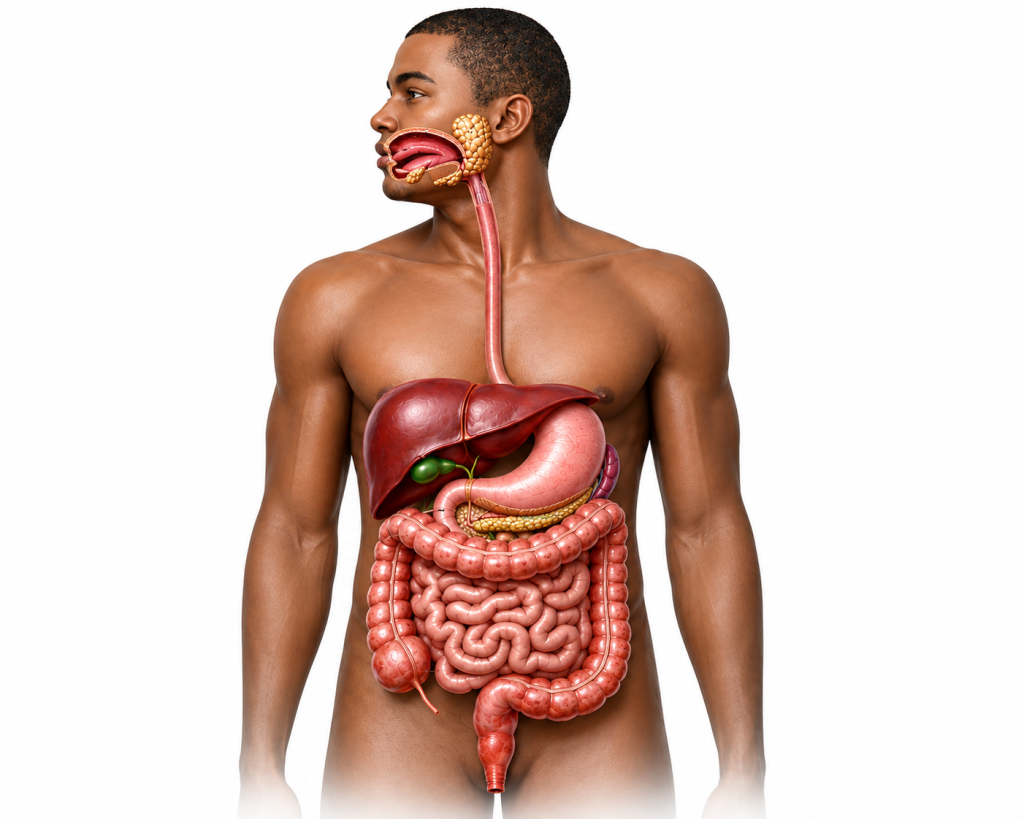
Your intestine is not just a tube that moves food through your body. The intestinal lining acts as a protective barrier between the contents of your digestive tract and the rest of your body. A healthy intestinal barrier performs a delicate job:
- It allows nutrients to pass into the body.
- It helps prevent harmful substances from crossing the intestinal wall.
- It communicates with your immune system.
- It interacts with trillions of microorganisms living in your gut.
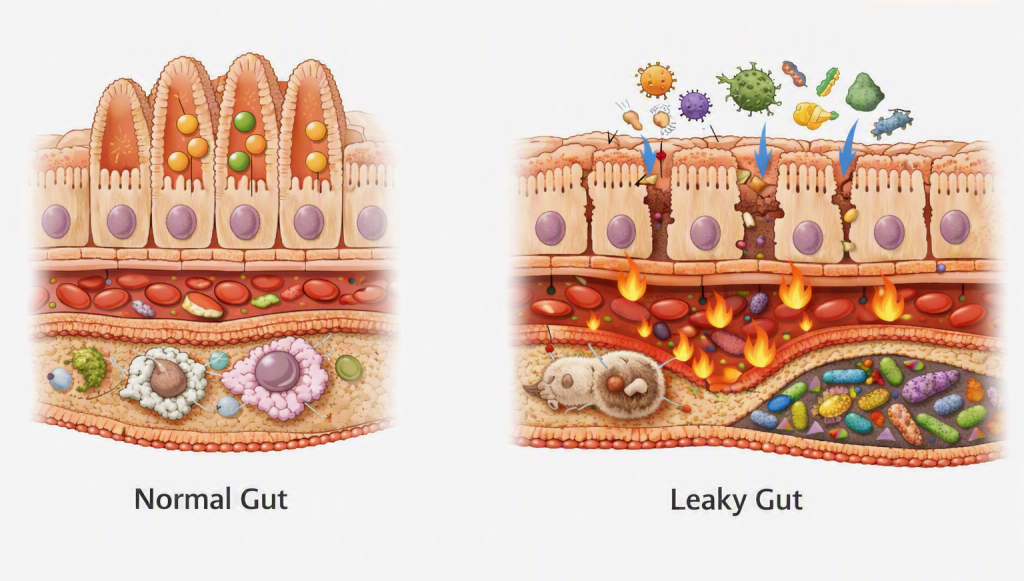
The cells lining your intestine are connected by structures called tight junctions. These junctions help control what passes between intestinal cells. When these barrier functions change, scientists may observe increased intestinal permeability.
Research has shown changes in intestinal permeability in several gastrointestinal diseases, including celiac disease, Crohn’s disease and other inflammatory conditions. (Hollander, 1999; Michielan & D’Incà, 2015)
So, the science behind the intestinal barrier is real. However, the internet often uses “leaky gut” as a broad explanation for many unrelated symptoms. That is where confusion begins.
How Do I Know If I Have Leaky Gut?
You need the Gold‑Standard Test + signs and symptoms + your doctor’s input. You cannot just conclude you have a leaky gut when experiencing symptoms such as:
- frequent bloating
- constipation
- abdominal discomfort
- excessive gas
- changes in bowel habits
- diarrhea
All being said and done, you must factor in this to conclude on a leaky gut:
- symptoms
- medical history
- examination findings
- other investigations
Irritable Bowel Syndrome (IBS)
IBS is a common digestive disorder that can cause:
- abdominal pain
- bloating
- diarrhea
- constipation
- changes in bowel habits
(National Institute of Diabetes and Digestive and Kidney Diseases [NIDDK], 2017)
Many people with IBS worry they have leaky gut because the symptoms overlap.
Celiac Disease
Celiac disease is an immune reaction to gluten that damages the small intestine.
Symptoms may include:
- diarrhea
- abdominal pain
- bloating
- weight loss
- fatigue
- nutrient deficiencies
Some people may have few digestive symptoms or symptoms outside the digestive system.
(NIDDK, 2020)
Inflammatory Bowel Disease
Inflammatory bowel disease (IBD), including Crohn’s disease and ulcerative colitis, involves inflammation of the digestive tract.
Symptoms may include:
- persistent diarrhea
- abdominal pain
- blood in stool
- fatigue
- weight loss
(NIDDK, 2024a; NIDDK, 2020)
This is why a person should not assume:
“I have bloating, therefore I have leaky gut.”
The same symptom can have many different causes.
What Are the Signs of Leaky Gut?
There is no single sign that proves you have increased intestinal permeability.
People who believe they have leaky gut commonly report:
Digestive symptoms
- bloating
- abdominal discomfort
- irregular bowel movements
- diarrhea
- constipation
- excessive gas
Food-related symptoms
Some people notice that certain foods appear to trigger digestive discomfort.
However, food reactions can happen for many reasons, including:
- food intolerance
- IBS
- allergies
- celiac disease
- other digestive disorders
A food trigger alone does not confirm leaky gut.
Symptoms outside the gut
You may see claims online linking leaky gut with:
- brain fog
- fatigue
- joint pain
- skin problems
- headaches
Some people with digestive disorders may experience symptoms beyond the gut. However, these symptoms are also common in many other situations, and they should not automatically be blamed on intestinal permeability.
Is There a Test for Leaky Gut?
One commonly studied test is the lactulose-mannitol test.
In this test, a person consumes two sugars. Researchers then measure how much of these substances appear in urine. The difference between the two sugars can provide information about intestinal barrier function. (Hollander, 1999)
What About Zonulin Tests?
Many online companies promote zonulin testing as a way to diagnose leaky gut. Zonulin is a protein involved in regulating intestinal permeability, which is why researchers are interested in it. However, concerns have been raised about some commercially available zonulin tests. A study published in Gut found that commonly used commercial zonulin ELISA tests had important limitations and did not reliably measure the specific biological marker they claimed to measure. (Massier et al., 2021)
How Do Doctors Find Out What Is Wrong With Your Gut?
A healthcare professional usually starts with your story.
Important questions include:
- When did your symptoms begin?
- Are they getting worse?
- Do they happen after certain foods?
- Are your bowel movements changing?
- Have you lost weight without trying?
- Is there blood in your stool?
- Do digestive problems run in your family?
- What medicines or supplements do you take?
Depending on your symptoms, evaluation may include:
- blood tests
- stool tests
- imaging
- endoscopy
- other specialised investigations
The goal is not simply to give your symptoms a label. The goal is to find the most accurate explanation.
What Should I Do If I Think I Have Leaky Gut?
If you suspect you have leaky gut because of ongoing digestive symptoms, the best first step is not to start a long list of supplements or restrictive diets.
The best first step is to understand what is causing your symptoms.
Start by paying attention to patterns:
- When did the symptoms begin?
- Are they improving, staying the same, or getting worse?
- Are certain foods consistently linked with symptoms?
- Are your bowel movements different from before?
- Are there symptoms happening outside your digestive system?
- Are you losing weight without trying?
Keeping a simple symptom diary can help you and your healthcare professional identify useful patterns.
A proper evaluation may reveal conditions that have specific treatments, such as:
- irritable bowel syndrome (IBS)
- celiac disease
- inflammatory bowel disease
- lactose intolerance
- infections
- medication-related digestive problems
- other gastrointestinal conditions
Finding the correct cause is much more valuable than simply applying the label “leaky gut.”
When Should I See a Doctor?
Many digestive symptoms are common and may not be caused by a serious condition. However, some symptoms deserve medical attention. Speak with a healthcare professional if you have:
- blood in your stool
- black, tar-like stools
- unexplained weight loss
- persistent vomiting
- severe or worsening abdominal pain
- ongoing diarrhea
- fever with digestive symptoms
- unexplained anemia
- symptoms that wake you from sleep
- a significant change in your usual bowel habits
These signs do not automatically mean something dangerous is happening, but they should not be ignored. For example, doctors consider symptoms such as bleeding, weight loss and anemia important when evaluating digestive complaints because they may suggest conditions that require further investigation. (NIDDK, 2017)
Can You Heal a Leaky Gut?
This is one of the most searched questions online.
The honest answer is:
It depends on what is causing the intestinal barrier problem. If increased intestinal permeability occurs as part of another condition, then addressing that underlying condition is usually the priority.
For example:
- Celiac disease requires proper diagnosis and management.
- Inflammatory bowel disease requires medical treatment.
- Food intolerances require identifying and managing triggers.
- IBS requires an approach based on symptoms and individual needs.
There is no single “leaky gut cure” that works for everyone.
Be cautious of products that promise:
- “seal your gut in 7 days”
- “remove all toxins”
- “repair your intestinal lining instantly”
- “cure dozens of diseases”
Health decisions should be based on evidence, not fear.
What Can I Do to Support Gut Health?
Although there is no universal “leaky gut diet,” several habits support overall digestive health.
Eat a varied, balanced diet
A diverse diet provides different nutrients and supports a healthy gut environment.
Many people benefit from including:
- vegetables
- fruits
- legumes
- whole grains when tolerated
- adequate protein sources
- healthy fats
The best diet is one that supports your health and fits your individual needs.
Include fibre when appropriate
Dietary fibre supports normal bowel function and interacts with gut bacteria.
However, some people with digestive disorders may need to adjust fibre intake depending on their symptoms.
More is not always better for everyone.
Stay physically active
Regular physical activity is associated with many health benefits, including benefits for digestive health.
Prioritise sleep and stress management
The gut and brain communicate continuously through what scientists call the gut-brain axis.
Stress does not mean symptoms are imaginary.
It means the nervous system, immune system and digestive system influence each other.
Avoid unnecessary restriction
A common mistake is removing many foods without knowing whether they are actually causing a problem.
Extreme diets can sometimes create nutritional problems and increase anxiety around eating.
A thoughtful approach is usually better than a fearful one.
Is Leaky Gut the Same as IBS?
No.
They are different concepts.
IBS (irritable bowel syndrome) is a recognised disorder of gut-brain interaction that causes symptoms such as abdominal pain and changes in bowel habits. Increased intestinal permeability describes a change in the function of the intestinal barrier. They may overlap in research, but one does not automatically mean the other.
A person with IBS does not necessarily have “leaky gut,” and a person with increased intestinal permeability does not automatically have IBS.
(NIDDK, 2017; Bischoff et al., 2014)
Is Leaky Gut the Same as Celiac Disease?
No.
Celiac disease is a specific autoimmune condition triggered by gluten. It can damage the small intestine and affect nutrient absorption. Increased intestinal permeability may occur in celiac disease, but celiac disease has established diagnostic criteria and medical testing. (NIDDK, 2020)
If you suspect celiac disease, speak with a healthcare professional before avoiding gluten, because stopping gluten before testing may affect the accuracy of results.
Frequently Asked Questions About Leaky Gut
How do I know if I have leaky gut?
You cannot confirm it from symptoms alone. Symptoms such as bloating, gas, abdominal pain and bowel changes can occur in many digestive conditions.
A healthcare professional can help investigate possible causes.
What are the first signs of leaky gut?
There are no medically established “first signs” that prove leaky gut.
Common digestive complaints associated with concerns about leaky gut include bloating, discomfort and changes in bowel habits, but these symptoms are not specific.
Can a blood test detect leaky gut?
Currently, there is no standard blood test that can diagnose leaky gut syndrome.
Some commercial tests measure markers associated with intestinal barrier function, but their accuracy and clinical usefulness require careful interpretation.
Does everyone with bloating have leaky gut?
No.
Bloating is extremely common and can occur due to IBS, food intolerance, constipation, diet changes, infections and many other causes.
Can probiotics fix leaky gut?
Probiotics may benefit some people with certain digestive symptoms, but they are not a guaranteed treatment for leaky gut.
Different probiotic strains have different effects, and benefits depend on the individual situation.
Should I take supplements for leaky gut?
Be careful.
Some supplements may be useful in specific situations, but there is no universal supplement proven to “heal leaky gut”.
Always consider evidence, safety and your personal health situation.
References (APA 7th Edition)
Bischoff, S. C., Barbara, G., Buurman, W., Ockhuizen, T., Schulzke, J. D., Serino, M., Tilg, H., Watson, A., & Wells, J. M. (2014). Intestinal permeability—A new target for disease prevention and therapy. BMC Gastroenterology, 14, Article 189.
https://doi.org/10.1186/s12876-014-0189-7
Hollander, D. (1999). Intestinal permeability, leaky gut, and intestinal disorders. Current Gastroenterology Reports, 1(5), 410–416.
https://doi.org/10.1007/s11894-999-0023-5
Massier, L., Chakaroun, R., Kovacs, P., & Heiker, J. T. (2021). Blurring the picture in leaky gut research: How shortcomings of zonulin as a biomarker mislead the field of intestinal permeability. Gut, 70(9), 1801–1802.
https://doi.org/10.1136/gutjnl-2020-323026
Michielan, A., & D’Incà, R. (2015). Intestinal permeability in inflammatory bowel disease: Pathogenesis, clinical evaluation, and therapy of “leaky gut.” Mediators of Inflammation, 2015, Article 628157.
https://doi.org/10.1155/2015/628157
National Institute of Diabetes and Digestive and Kidney Diseases. (2017). Diagnosis of irritable bowel syndrome.
https://www.niddk.nih.gov/health-information/digestive-diseases/irritable-bowel-syndrome/diagnosis
National Institute of Diabetes and Digestive and Kidney Diseases. (2017). Symptoms & causes of irritable bowel syndrome.
National Institute of Diabetes and Digestive and Kidney Diseases. (2020). Celiac disease.
https://www.niddk.nih.gov/health-information/digestive-diseases/celiac-disease
National Institute of Diabetes and Digestive and Kidney Diseases. (2020). Ulcerative colitis: Symptoms & causes.
https://www.niddk.nih.gov/health-information/digestive-diseases/ulcerative-colitis/symptoms-causes
National Institute of Diabetes and Digestive and Kidney Diseases. (2024). Crohn’s disease: Symptoms & causes.
https://www.niddk.nih.gov/health-information/digestive-diseases/crohns-disease/symptoms-causes
National Institute of Diabetes and Digestive and Kidney Diseases. (2024). Crohn’s disease: Diagnosis.
https://www.niddk.nih.gov/health-information/digestive-diseases/crohns-disease/diagnosis