
10 Best Probiotics for Gut Health: Finessa Supplement & More

Are probiotics good for gut health? And does the probiotic you choose really matter? Digestive problems such as bloating, constipation, gas, and stomach discomfort have become increasingly common in adults. There are dozens of products on the market, from well-studied probiotic strains to popular supplements such as Finessa.
In this article, we look at 10 probiotics for gut health, including what their strains are, what the research actually shows, and what to consider before choosing a supplement. We also take a closer look at the Finessa supplement, what FDA said concerning the product, so you can understand where it fits among the many probiotic options available.
Inside the human digestive tract lives a complex ecosystem of trillions of microorganisms known as the Gut Microbiome. These microbes play an essential role in digestion, immune defence, and nutrient absorption.
Scientific evidence shows that disruptions to the gut microbiome caused by factors such as antibiotic use, stress, poor diet, and processed foods can lead to digestive problems and inflammation (Azad et al., 2018).
What probiotics do to your gut health
Probiotics are beneficial microorganisms that help restore balance in the digestive system and support healthy gut bacteria. Research shows that probiotic supplementation may improve digestive health, strengthen immune responses, and enhance microbial balance in the intestines (Quigley, 2019).
The Gut Normal Flora
Many people assume these symptoms are a normal part of aging. However, research suggests they may be linked to an imbalance in the gut microbiome. In addition, this imbalance can affect digestive comfort and overall gut function. In this article, we will explore 10 of the best probiotics for gut health backed by scientific research, as well as how they work in the body and, most importantly, how to choose the right probiotic supplement.
What Are Probiotics for Gut Health?
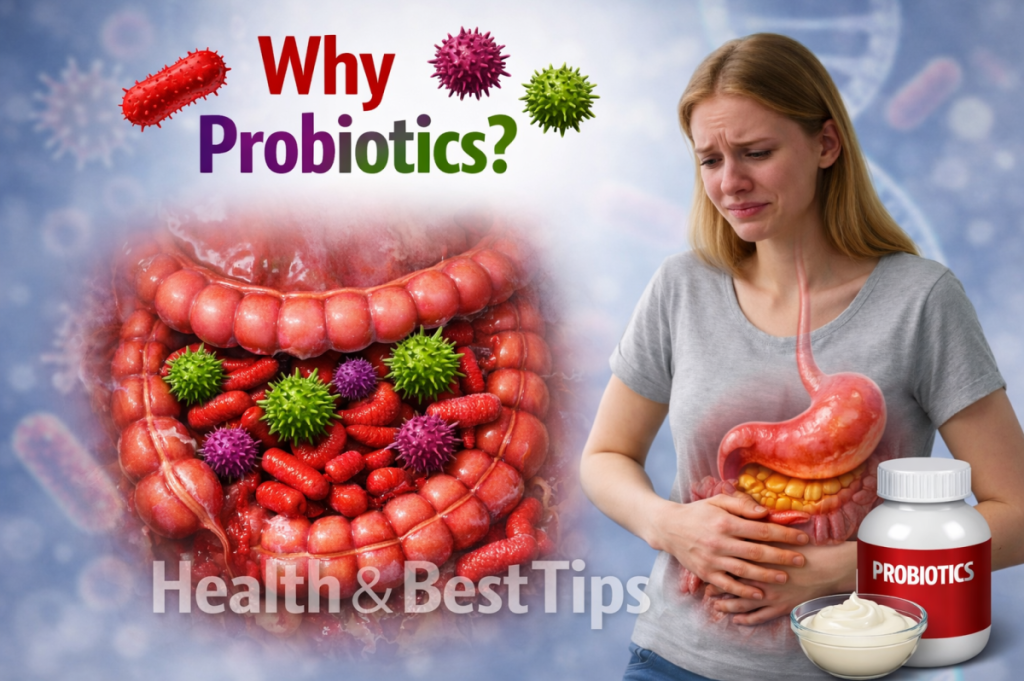
Probiotics are live beneficial microorganisms that provide health benefits when consumed in adequate amounts. According to the National Centre for Complementary and Integrative Health, probiotics help maintain the natural balance of bacteria in the digestive system and may improve digestive health.
Studies have demonstrated that probiotics influence the composition and activity of gut microbiota, which plays a major role in human health (Chandrasekaran et al., 2024).
How Probiotics Support Gut Health
The gut microbiome contains beneficial bacteria that help regulate digestive processes and immune responses. When probiotics are introduced into the digestive system, they can support gut health in several ways:
- Strengthen the intestinal barrier
- Restore microbial balance
- Compete with harmful microbes for nutrients and space in the intestine.
- Certain probiotic strains help reinforce the protective lining of the gut.
- Improve digestion
- Support immune function (Zhang et al., 2021).
How to Choose the Best Probiotics Supplement for Gut Health
When choosing probiotics, consider the following 3 things:
- Multiple strains
- Products containing Lactobacillus and Bifidobacterium strains provide broader digestive support.
- CFU count
- Look for 5–20 billion colony-forming units (CFUs).
- Clinical research
- Choose supplements backed by scientific evidence.
Finessa Supplement Review: Ingredients, Benefits, Pros, Cons & What to Know
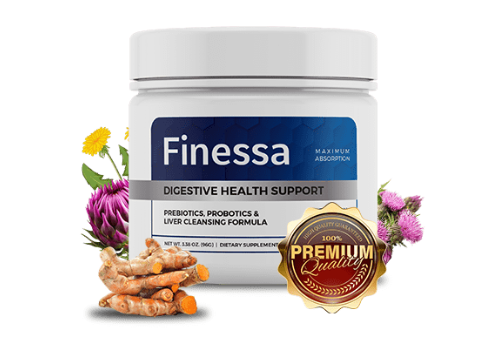
If you are considering Finessa, be aware of its ingredients especially “cascara sagrada” and discuss it with a healthcare professional if you have medical conditions or take medications
What Is in Finessa?
Finessa is a powdered dietary supplement marketed for gut and digestive health. Its formulation combines probiotics with prebiotics, fruit-derived polyphenols, botanical ingredients, and ingredients marketed for digestive and liver support.
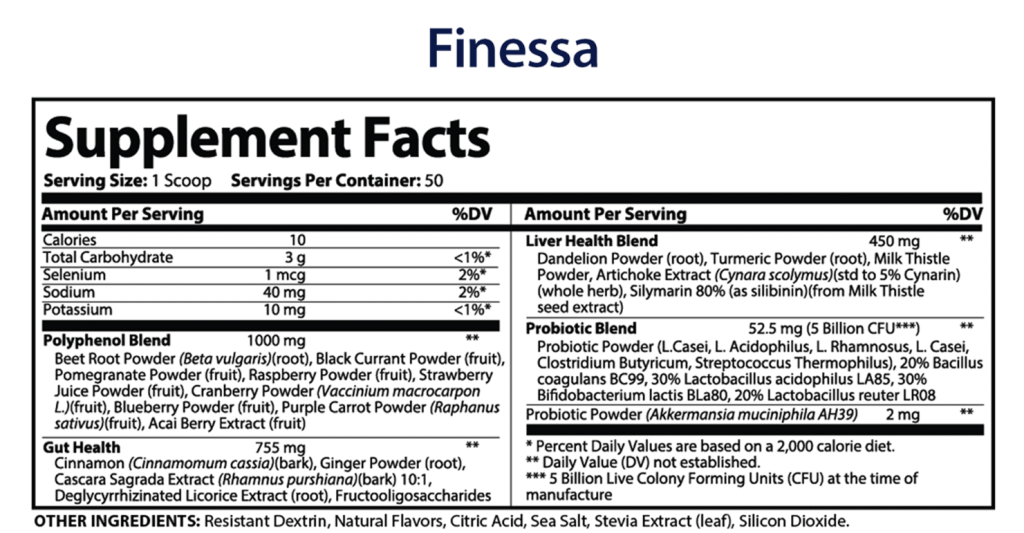
One serving is 1 scoop, and the container provides 50 servings. The label lists 10 calories, 3 g of total carbohydrate, 40 mg of sodium, 10 mg of potassium, and 1 mcg of selenium. The formula also contains several proprietary or blended ingredients, including a polyphenol blend, gut-health blend, liver-health blend, and probiotic blend.
The most important part of the formulation for someone specifically looking for a probiotic is its probiotic blend. The label states 52.5 mg providing 5 billion CFU at the time of manufacture.
The listed probiotic organisms include Lactobacillus casei, Lactobacillus acidophilus, Lactobacillus rhamnosus, Clostridium butyricum, and Streptococcus thermophilus. The label also identifies specific strains including Bacillus coagulans BC99, Lactobacillus acidophilus LA85, Bifidobacterium lactis BLa80, and Lactobacillus reuteri LR08. It additionally lists Akkermansia muciniphila AH39.
That level of strain information is useful because probiotic effects are generally strain- and condition-specific. Evidence supporting one strain should not automatically be interpreted as proof that every product containing the same species will produce the same result.
Finessa Ingredients & Critical Health Warning
The label lists a 450 mg gut-health blend containing cinnamon, ginger, cascara sagrada extract, deglycyrrhizinated licorice (DGL), and fructooligosaccharides (FOS). While FOS acts as a healthy prebiotic and ginger supports digestion, the inclusion of cascara sagrada changes how this supplement must be used.
Cascara sagrada is a potent stimulant laxative, not a gentle daily probiotic. The FDA has classified cascara sagrada as not generally recognized as safe and effective (not GRASE) for over-the-counter stimulant laxative use.
Because of this, Finessa should not be taken as a long-term daily probiotic supplement. Continuous use of stimulant laxatives can cause your bowels to depend on them to move, alongside risking severe dehydration and dangerous electrolyte imbalances. If you use Finessa, treat it strictly as a short-term option for temporary constipation relief, rather than a daily routine for baseline gut health.
What About the Liver and Polyphenol Blends?
Finessa also contains a 40 mg liver-health blend with dandelion, turmeric, milk thistle, artichoke extract, and silymarin.
The label lists a much larger 755 mg polyphenol blend, including beet root, black currant, pomegranate, raspberry, strawberry, cranberry, blueberry, purple carrot, and acai berry extract.
These ingredients provide various plant compounds, but their inclusion does not by itself prove that Finessa can “detox” the liver or treat liver disease. Individual ingredients may have research behind them, but that is different from having clinical evidence for the finished Finessa formulation.
Finessa Benefits: What Can We Reasonably Say?
The formulation is clearly designed to provide several forms of digestive support at once. Its probiotic and prebiotic components may support the intestinal microbial environment, while ingredients such as ginger and FOS may contribute to digestive function.
However, I would be cautious about promising that Finessa will cure bloating, constipation, gas, or other digestive problems. The presence of an ingredient with evidence is not evidence that the finished Finessa product treats a condition.
This distinction is especially important with probiotics. Clinical evidence often applies to a particular strain, dose, and health condition.
Finessa Pros and Cons
Pros
- Convenient powdered formulation.
- Provides a clearly stated 5 billion CFU at the time of manufacture.
- Includes several specifically identified probiotic strains.
- Combines probiotics with a prebiotic ingredient.
- Contains a broad range of fruit and plant-derived ingredients.
Cons
- It is a complex multi-ingredient formula, making it difficult to determine which component is responsible for any benefit.
- Evidence for individual ingredients does not necessarily establish effectiveness of the finished product.
- The presence of cascara sagrada deserves caution. FDA classified cascara sagrada as not generally recognized as safe and effective (not GRASE) for as over-the-counter stimulant-laxative
- Several ingredients are presented within blends, which limits the amount of information available about each individual ingredient.
Finessa Side Effects and Safety
Probiotics can sometimes cause temporary gas, bloating, or other gastrointestinal changes when first introduced. People with serious underlying illness or severely weakened immune systems should discuss probiotic use with a healthcare professional.
For Finessa specifically, cascara sagrada is an additional consideration. Someone looking for a straightforward daily probiotic should recognize that Finessa is more than a probiotic supplement because it also contains a stimulant-laxative ingredient.
Anyone with persistent constipation, severe abdominal pain, vomiting, blood in the stool, unexplained weight loss, or another concerning digestive symptom should seek medical evaluation rather than relying on a supplement.
My Take on Finessa Supplement
Finessa is an interesting formula because it combines probiotics, a prebiotic, botanical ingredients, and fruit-derived compounds rather than relying on probiotics alone.
My main advice is to look beyond the marketing. The 5-billion-CFU figure is useful information, but CFU count alone does not determine whether a probiotic will work for a particular person. The specific strains, doses, formulation, safety considerations, and evidence for the intended use matter more.
The other major consideration is cascara sagrada. Someone specifically looking for a daily probiotic should know that Finessa contains a stimulant-laxative ingredient and should consider whether that fits their needs.
10 Best Probiotics for Gut Health (Backed by Science)- Top 5 Recommended High-Class Supplements
🌟 Top 5 Multi-Strain Probiotics
| Rank | Probiotic Name | Strains / CFU | Benefits & Research | |
|---|---|---|---|---|
| 1st | Seed DS‑01 Daily Synbiotic | 24 strains / 40B CFU | Broad microbiome support, synbiotic (probiotic+prebiotic), heavily researched | View Product 1st |
| 2nd | VSL#3 / Visbiome | 8 strains / up to 112B CFU | High potency, used clinically for IBS & IBD | View Product 2nd |
| 3rd | Garden of Life Dr. Formulated Once Daily | 15 strains / 30B CFU | Organic, broad-spectrum support for gut & immunity | View Product 3rd |
| 4th | Vitauthority Advanced Probiotics | 12 strains / 35B CFU | Supports digestive health and immune balance | View Product 4th |
| 5th | Dr. Ohhira’s Probiotics Original Formula | 12 strains / 10B CFU | Fermented, supports gut flora and general well-being | View Product 5th |
🌟 Top 10 Single-Strain Probiotics
| # | Probiotic Strain | CFU | Benefits & Research | |
|---|---|---|---|---|
| 1 | Lactobacillus rhamnosus GG | 10–20B CFU | Supports digestive balance, reduces diarrhea from antibiotics. (Quigley, 2019) | Culturelle Daily Probiotic Featured Option |
| 2 | Bifidobacterium lactis | 5–15B CFU | Improves bowel regularity, reduces bloating, supports gut microbial diversity | Finessa Featured Option |
| 3 | Lactobacillus acidophilus | 5–20B CFU | Maintains healthy gut flora, supports lactose digestion | Nature’s Bounty Acidophilus Featured Option |
| 4 | Bifidobacterium longum | 5–10B CFU | Maintains colon health and reduces inflammation | Align Probiotic Featured Option |
| 5 | Saccharomyces boulardii | 250–500M CFU | Supports recovery after antibiotics | Florastor Featured Option |
| 6 | Lactobacillus plantarum | 5–15B CFU | Supports intestinal barrier integrity, reduces digestive discomfort | NOW Foods L. Plantarum Featured Option |
| 7 | Bifidobacterium bifidum | 1–10B CFU | Helps digest dietary fiber and supports immune health | Jarrow Bifidobacterium Bifidum Featured Option |
| 8 | Lactobacillus reuteri | 1–5B CFU | Produces antimicrobial compounds that help control harmful bacteria | BioGaia L. Reuteri Featured Option |
| 9 | Bifidobacterium breve | 1–10B CFU | Supports gut microbial balance and digestive comfort | NOW Foods B. Breve Featured Option |
| 10 | Lactobacillus casei | 5–15B CFU | Supports digestive enzyme production and gut microbiota balance | Yakult / Custom L. Casei Featured Option |
Top 5 Natural Foods That Contain Probiotics

Kefir, Yogurt, Kimchi, Sauerkraut, and Miso
Fermented foods like kefir, yogurt, kimchi, sauerkraut, and miso can provide beneficial live microorganisms, including species of Lactobacillus and Bifidobacterium. In addition, these foods can be an easy and enjoyable way to include fermented foods in your diet. However, the number and types of live microorganisms can vary depending on the food and how it is processed. For this reason, products labeled with live and active cultures may be preferable when you are specifically seeking probiotic organisms. Below, we look at the top 5 probiotic foods, their main microorganisms, available CFU information, and the research behind their potential gut-health benefits.:
| Top Probiotic Food | Main Strains | CFU (Billion) | Research |
|---|---|---|---|
| #1 Kefir View Food | L. kefiri, L. acidophilus | 10–100B per 100ml | Highly diverse probiotics supporting gut microbiome |
| #2 Yogurt View Food | L. bulgaricus, S. thermophilus | 0.1–10B per 100g | Well-studied for digestion and gut balance |
| #3 Kimchi View Food | L. sakei, L. plantarum | 1–5B per 100g | Fermented vegetables rich in beneficial bacteria |
| #4 Sauerkraut View Food | L. plantarum, L. brevis | 1–5B per 100g | Supports digestive and microbial health |
| #5 Miso View Food | A. oryzae, Lactobacillus | 0.1–1B per 100g | Traditional fermented soy with beneficial microbes |
Signs Your Gut May Need Probiotics
You may benefit from probiotics for gut health if you experience:
- Frequent bloating
- Gas after meals
- Constipation or diarrhoea
- Food sensitivities
- Fatigue
- Frequent infections
Research suggests these symptoms may be associated with gut microbiome imbalance (Azad et al., 2018).
FQAs
| Frequently Asked Questions About Probiotics for Gut Health | |
|---|---|
| Do probiotics improve gut health? | |
|
Yes. Scientific studies show probiotics can improve digestive health and support gut microbial balance (Quigley, 2019).
|
|
| How long does it take probiotics to work? | |
|
Many people notice improvements within 2–4 weeks of consistent use.
|
|
| Are probiotics safe? | |
|
Most probiotics are considered safe for healthy individuals when taken as directed.
|
|
| Should probiotics be taken daily? | |
|
Daily probiotic supplementation may help maintain gut microbiome balance.
|
Conclusion
Maintaining a healthy digestive system starts with supporting the gut microbiome.
Scientific evidence continues to show that probiotics for gut health can help restore microbial balance, improve digestion, and support immune health.
Choosing a high-quality probiotic supplement with clinically studied strains may help improve digestive comfort and promote long-term wellness.
References
Azad, M. A. K., Sarker, M., Li, T., & Yin, J. (2018). Probiotics, gut microbiota, and their influence on host health and disease. Frontiers in Microbiology, 9, 1024.
https://pubmed.ncbi.nlm.nih.gov/27500859/
Chandrasekaran, P., Weiskirchen, S., & Weiskirchen, R. (2024). Effects of probiotics on gut microbiota: An overview. International Journal of Molecular Sciences.
https://www.ncbi.nlm.nih.gov/pmc/articles/PMC11172883/
Khalesi, S., Bellissimo, N., Vandelanotte, C., Williams, S., Stanley, D., & Irwin, C. (2019). Probiotic supplementation in healthy adults. European Journal of Clinical Nutrition.
https://pubmed.ncbi.nlm.nih.gov/29581563/
Quigley, E. M. M. (2019). Prebiotics and probiotics in digestive health. Clinical Gastroenterology and Hepatology.
https://pubmed.ncbi.nlm.nih.gov/30267869/
Zhang, H., Yeh, C., Jin, Z., et al. (2021). Probiotics regulate gut microbiota and immunity. BioMed Research International.
https://pubmed.ncbi.nlm.nih.gov/34641619/
Read More: www.healthandbestips.com