
Sat Isabgol (Psyllium Husk): Benefits, Uses, Dosage & Clinical Insights

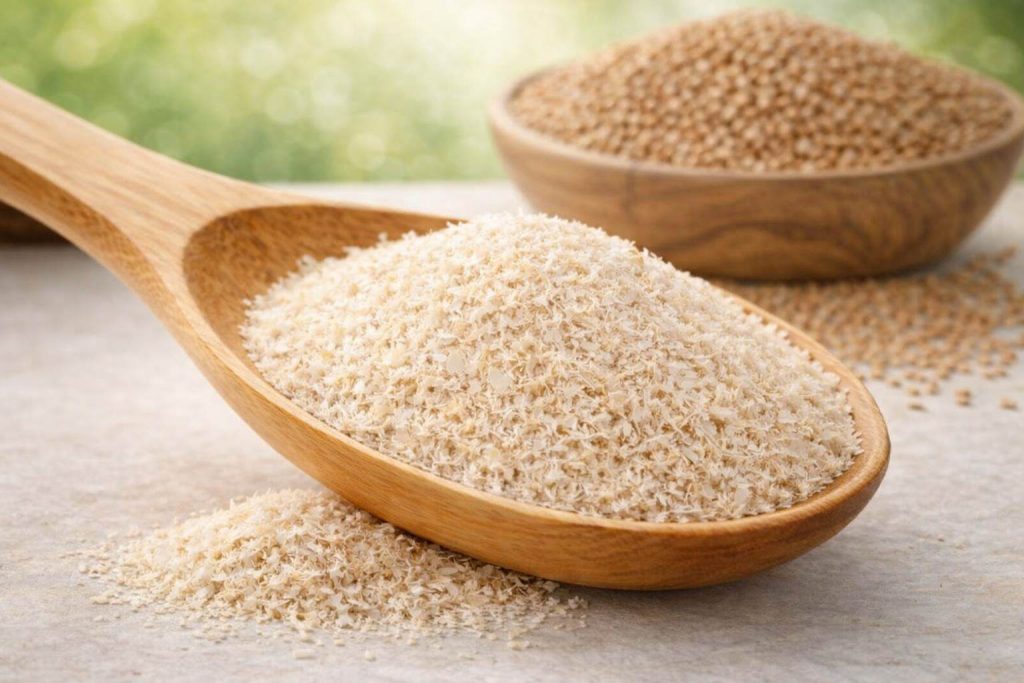
What is Sat Isabgol?
Sat Isabgol refers to the purified husk obtained from the seeds of Plantago ovata. It is a natural source of soluble fibre widely used in clinical nutrition for improving digestion, supporting heart health, and helping regulate blood sugar levels (Kumar et al., 2026).
Unlike many fibre supplements, psyllium forms a soft gel when mixed with water, making it particularly effective for bowel regulation without irritating the gut.
How Sat Isabgol Works in the Body
Once ingested, psyllium absorbs water and expands in the gastrointestinal tract, forming a viscous gel. This process:
- Enhances stool bulk and softness
- Slows down digestion and glucose absorption
- Supports smoother intestinal transit
These remarkable physiological effects vividly illustrate its vital role in supporting both digestive and metabolic health, showcasing how it contributes to efficient nutrient absorption, optimal energy utilization, and the overall harmony of bodily functions.(Mehmood et al., 2011).
Digestive Health Benefits
Relief from Constipation
Sat Isabgol is widely recognized as one of the most effective natural remedies for alleviating constipation, valued for its high fiber content and gentle laxative properties that promote regular bowel movements and support overall digestive health. It improves stool hydration and promotes regular bowel movements without causing dependency (Yang et al., 2021).
It may also help:
- Reduce straining during defecation
- Improve stool consistency
- Support a healthier gut environment
Support in Irritable Bowel Syndrome (IBS)
Clinical reviews indicate that psyllium may reduce symptoms in individuals with IBS, especially those experiencing constipation-dominant patterns (Chouinard, 2011). Compared to insoluble fibers, it is generally better tolerated and less likely to exacerbate bloating.
Heart Health and Cholesterol Control
Regular intake of psyllium has been associated with reductions in LDL cholesterol levels (Gholami & Paknahad, 2025).
This occurs because the gel binds bile acids in the intestine, increasing their elimination. The liver then uses circulating cholesterol to produce more bile, leading to lower blood cholesterol levels.
Blood Sugar Regulation
In individuals with metabolic conditions such as type 2 diabetes, psyllium may help improve glycaemic control (Xiao et al., 2020).
Its benefits include:
- Slower absorption of carbohydrates
- Reduced post-meal glucose spikes
- Improved insulin response
Role in Weight Management
Some clinical evidence suggests that psyllium may support modest weight reduction by increasing satiety and reducing overall calorie intake (Gholami & Paknahad, 2025).
How to Use Sat Isabgol (Dosage Guide)
For safe and effective use:
- Take 1–2 teaspoons (about 5–10 grams)
- Mix in a full glass of water or juice
- Drink immediately before it thickens
- Follow with another glass of water
Regular use typically produces results within one to two days for constipation relief.
Safety and Precautions
Adequate Fluid Intake
As psyllium absorbs water and expands within the gastrointestinal tract, inadequate fluid intake can increase the risk of gastrointestinal discomfort or potential intestinal blockage. (Mehmood et al., 2011).
Drug Interactions
Psyllium may interfere with the absorption of certain medications.
Best practice:
Take it at least 1–2 hours apart from other medications.
Frequently Asked Questions
Is Sat Isabgol the same as psyllium husk?
Yes. Sat Isabgol is simply the refined form of psyllium husk derived from Plantago ovata.
Can it be taken daily?
It can be used daily if taken in appropriate amounts with enough water.
How quickly does it work?
Most people notice improvement in bowel movement within 12–48 hours.
What is it mainly used for?
It is commonly used for constipation, cholesterol management, and blood sugar control.
Conclusion
Sat Isabgol (psyllium husk) remains one of the most studied and clinically supported fibre supplements. Its ability to improve bowel function, support cardiovascular health, and assist in glycaemic control makes it a valuable addition to dietary management strategies (Kumar et al., 2026).
When used correctly with adequate hydration and attention to timing with medications, it is both safe and effective for long-term use.
Learn more @ www.healthandbestips.com
References
- Kumar A, Patel R, Yadav S, et al. Psyllium Husk: A Comprehensive Review of its Functional Properties, Health Benefits, Mechanisms of Action, and Potential Adverse Effects. Curr Nutr Rep. 2026;15(1):13. https://pubmed.ncbi.nlm.nih.gov/41697448/
- Mehmood MH, Aziz N, Ghayur MN, Gilani AH. Pharmacological basis for the medicinal use of psyllium husk (Ispaghula) in constipation and diarrhea. Dig Dis Sci. 2011;56(5):1460‑1471. https://pubmed.ncbi.nlm.nih.gov/21082352/
- Chouinard LE. The role of psyllium fibre supplementation in treating irritable bowel syndrome. Can J Diet Pract Res. 2011;72(1):e107‑e114. https://pubmed.ncbi.nlm.nih.gov/21382232/
- Gholami Z, Paknahad Z. The effect of psyllium consumption on anthropometric indices: a systematic review and dose‑response meta‑analysis of randomized controlled trials. J Health Popul Nutr. 2025;44(1):372. https://pubmed.ncbi.nlm.nih.gov/41126340/
- Yang C, Liu S, Li H, et al. The effects of psyllium husk on gut microbiota composition and function in chronically constipated women. Aging (Albany NY). 2021;13(11):15366–15383. https://pmc.ncbi.nlm.nih.gov/articles/PMC8221300/
- Xiao Z, et al. Effect of dietary fiber on weight, lipid profile, and glucose metabolism in diabetic patients. Phytother Res. 2020. https://pubmed.ncbi.nlm.nih.gov/31919936/