
Is Rice Unhealthy? NEW Discovery

Introduction:
Rice can be unhealthy, if we consider white rice and the frequency at which you eat it. Some people over eat it, and make it a major meal whilst reducing fiber diet and vegetables on their dish. Rice can be part of a healthy diet. The bigger issue is often how much you eat, how often you eat it, which type you choose, and what the rest of the meal looks like.
White rice deserves a little more attention because it is a refined grain and contains less fiber than brown rice. Research has also linked higher white-rice consumption with a higher risk of type 2 diabetes, particularly when intake is high. But that does not mean you need to completely remove rice from your diet.
There is a better way to look at it.
Is rice unhealthy?
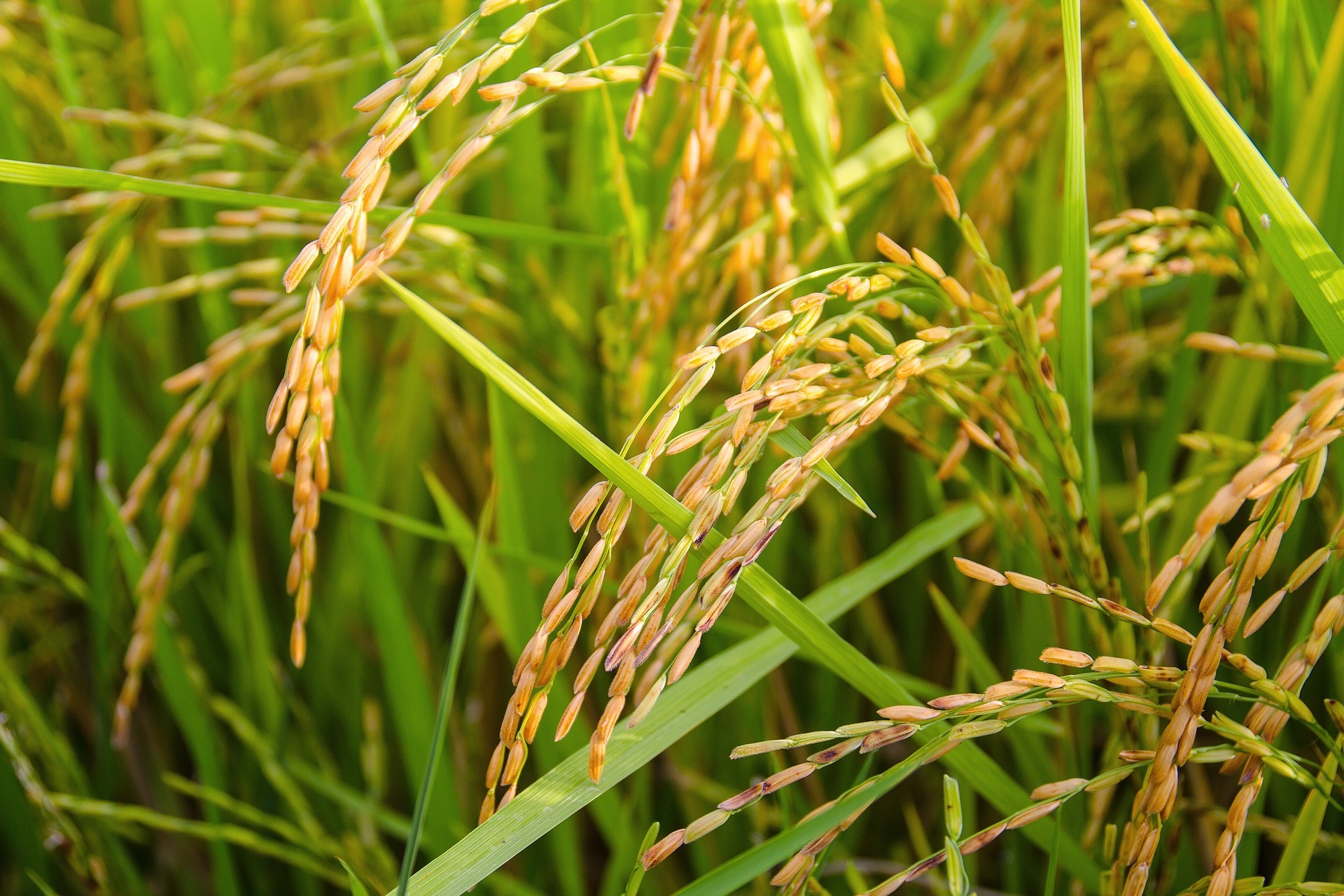
THE RICE IN THE FARM
Rice is a carbohydrate-rich food, and your body breaks down its carbohydrates into glucose that can enter the bloodstream.
That is not automatically a bad thing. Your body needs carbohydrates for energy.
The problem can come when large portions of refined carbohydrates become a regular part of the diet, especially when the meal contains very little fiber, vegetables or protein.
This is where white rice and brown rice are different. White rice has been milled and polished, removing the bran and germ. That leaves mainly the starchy endosperm. Brown rice, on the other hand, retains more of the grain and therefore provides more fiber and nutrients.
So, is rice unhealthy? I would not call rice an unhealthy food by itself. But eating large amounts of white rice very frequently may not be the best choice for everyone.
Why is white rice sometimes considered unhealthy?
The Hidden Truth About Rice: Arsenic and Blood Sugar
There are two issues about rice that deserve more attention: inorganic arsenic exposure and blood-sugar effects, particularly from frequent consumption of large portions of white rice.
Rice and arsenic
Rice is different from many other crops because it can absorb inorganic arsenic from soil and water more readily. Inorganic arsenic is the form of arsenic considered more toxic, and long-term exposure is a genuine public-health concern. This does not mean that eating rice occasionally is dangerous, or that you need to stop eating it.
The concern is more relevant when rice is eaten very frequently over long periods.
There is also something practical you can do. Research has found that cooking rice in plenty of water and then draining the excess can substantially reduce its inorganic arsenic content. One study found reductions of approximately 40% to 60%, depending on the type of rice. The catch? Some water-soluble nutrients can be lost during this cooking method as well. (pubmed.ncbi.nlm.nih.gov)
The FDA therefore recommends eating a varied diet rather than relying heavily on rice or any single food. (fda.gov)
What about blood sugar?
This is the other part of the story.
White rice is a refined grain and is relatively low in fiber. Eating a large portion can raise blood glucose, especially when the meal contains little fiber or protein.
Research has also found an association between higher white-rice consumption and type 2 diabetes risk. A 2022 systematic review and meta-analysis found that people with higher white-rice intake had a higher risk of developing type 2 diabetes in prospective observational studies. However, this does not prove that white rice itself causes diabetes, and randomized trials comparing brown and white rice have produced inconsistent results. (pubmed.ncbi.nlm.nih.gov)
So, don’t look at rice as a food you must fear.
The more useful solution is to watch the portion, add vegetables and protein, choose whole grains such as brown rice more often when practical, and vary your carbohydrate sources.
That is a much more sensible approach than simply removing rice from your diet.
The main concern is not that white rice is poisonous or inherently dangerous. It is what happens when it becomes a major source of refined carbohydrate in the diet.
A systematic review and meta-analysis published in BMJ Open examined 19 articles, including cohort studies and randomized trials. Higher white-rice intake was associated with a higher risk of type 2 diabetes, while brown-rice intake was associated with a lower risk in the observational studies. However, the researchers also noted that the evidence from replacement trials was inconsistent. That last part matters. An association does not prove that white rice directly causes diabetes.
People who eat large amounts of white rice may also have other dietary and lifestyle factors that affect their risk. So I would be careful with headlines claiming that white rice “causes diabetes.” The evidence does not justify that kind of statement.
What happens if you eat rice every day?
Eating rice every day is not automatically unhealthy. Millions of people eat rice regularly as a staple food.
The more useful question is: How much rice are you eating, and what are you eating with it?
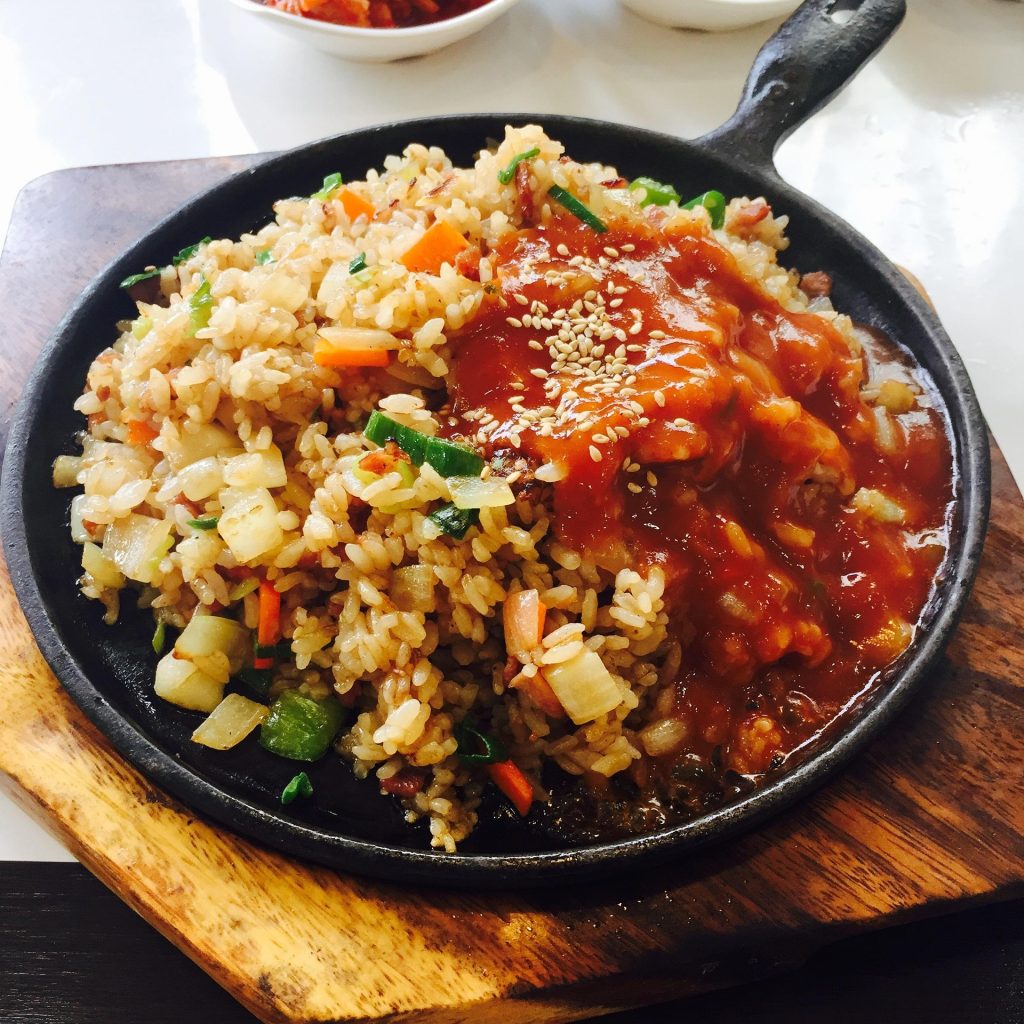
Imagine a plate containing a very large serving of white rice with little vegetable or protein. Now compare that with a meal containing a smaller portion of rice, plenty of vegetables, beans, fish, eggs or another protein source. They are both “rice meals,” but nutritionally they are not the same. That is the part people often overlook. Your overall eating pattern matters.
White rice vs. brown rice
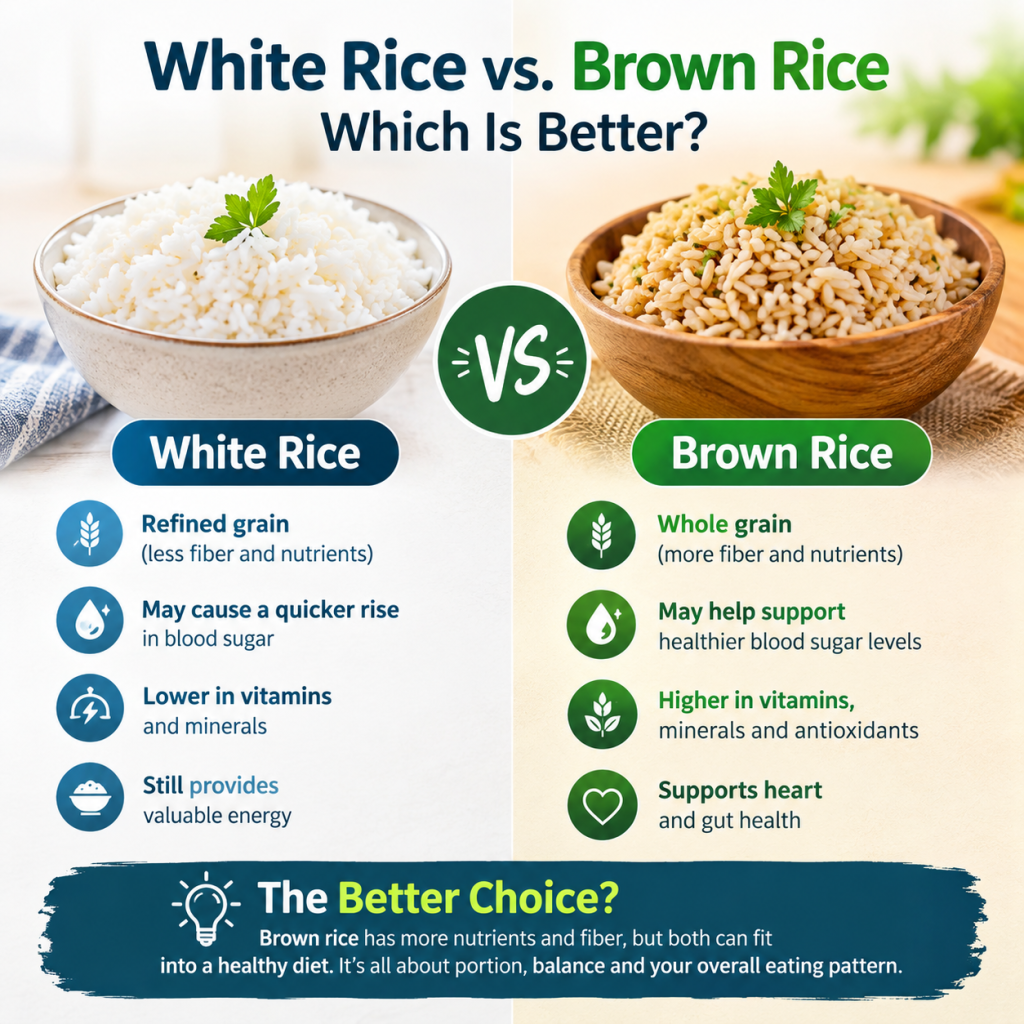
Brown rice has an advantage because it is a whole grain.
Whole grains retain the bran, germ and endosperm. Refining removes the bran and germ, which also removes much of the fiber and some nutrients. The American Heart Association lists brown rice among whole-grain foods and recommends choosing whole grains more often than refined grains.
A 2022 systematic review found that, in prospective cohort studies, white rice was associated with higher type 2 diabetes risk, while brown rice was associated with lower risk. However, the researchers rated the evidence from randomized trials as more limited and found inconsistent results for several cardiometabolic outcomes.
So, if you have the option and enjoy it, switching some of your white rice to brown rice or another whole grain is a reasonable improvement. But don’t think brown rice magically makes an unhealthy meal healthy. Portion and the rest of the plate still matter.
Does rice raise blood sugar?
Yes, rice contains carbohydrate, so eating it can raise blood glucose. The size of that rise can depend on the amount eaten, the type of rice and what else is in the meal.
This is especially important for people with diabetes or prediabetes. The American Diabetes Association’s plate method suggests filling about half the plate with non-starchy vegetables, one-quarter with protein, and one-quarter with carbohydrate foods, such as whole grains. Brown rice is one of the examples they give for the carbohydrate section.
Think about it this way. You don’t necessarily have to ask, “How do I stop eating rice?” A better question may be: “How can I make my rice meal more balanced?” That change in thinking can be much easier to maintain.
So, what is the solution if you eat rice often?
You don’t necessarily need to stop eating rice. Try these simple changes instead.
1. Reduce the portion
If your plate is mostly rice, start by reducing the amount slightly. You don’t have to make a dramatic change overnight. A smaller serving leaves more room for vegetables and protein.
2. Add more vegetables
This is one of the easiest improvements. Instead of making rice the biggest part of the meal, make vegetables a much larger part of the plate. Vegetables add fiber and volume without providing the same carbohydrate load as a large serving of rice.
3. Include protein
Fish, beans, lentils, eggs, chicken and other protein foods can make the meal more balanced. The goal is not to make rice the entire meal.
4. Choose whole grains more often
When practical, try brown rice or other whole grains. The American Heart Association recommends choosing whole grains rather than refined grains as part of a healthy dietary pattern. You can also vary your carbohydrate sources with foods such as beans, lentils, oats, millet or other whole grains.
5. Be particularly careful if you have diabetes or prediabetes
If you have diabetes or prediabetes, portion size and carbohydrate quality deserve more attention. The American Diabetes Association’s plate method is a simple starting point: half non-starchy vegetables, one-quarter protein and one-quarter quality carbohydrate. If you use medication or insulin, however, your individual carbohydrate needs may be different. Your doctor or dietitian can help you determine what works for you.
Is white rice completely bad for you?
No. That would be an oversimplification.
White rice provides carbohydrate and can fit into a healthy diet. The concern is more about frequent large portions and the overall dietary pattern, particularly when refined grains displace higher-fiber foods. A 2022 meta-analysis found an association between higher white-rice consumption and type 2 diabetes risk, but it also emphasized limitations in the evidence and inconsistency in the randomized trials.
So don’t panic because you ate a bowl of white rice today. Look at the pattern. What you eat most days matters much more than one meal.
The bottom line
So, is rice unhealthy food?
Not by itself. Rice can fit into a healthy diet, but eating very large portions of white rice frequently may be less favorable than choosing smaller portions and including more fiber-rich foods. If rice is a daily staple in your diet, you don’t necessarily need to eliminate it. Start with something simpler:
smaller portions + more vegetables + a good protein source + more whole grains when practical.
That is a much more realistic solution than simply declaring rice “bad.” And if you have diabetes, prediabetes, or another condition affected by carbohydrate intake, your ideal portion may need to be individualized.
References
Hu, E. A., Pan, A., Malik, V., & Sun, Q. (2012). White rice consumption and risk of type 2 diabetes: Meta-analysis and systematic review. BMJ, 344, e1454. https://doi.org/10.1136/bmj.e1454.
Wang, Y., et al. (2022). White rice, brown rice and the risk of type 2 diabetes: A systematic review and meta-analysis. BMJ Open, 12(9), e065426.
American Heart Association. (2024). Get to know grains: Why you need them, and what to look for.
American Diabetes Association. (2024). Nutrition for Life: Diabetes Plate Method.
Gray, P. J., Conklin, S. D., Todorov, T. I., & Kasko, S. M. (2016). Cooking rice in excess water reduces both arsenic and enriched vitamins in the cooked grain. Food Additives & Contaminants: Part A, 33(1), 78–85. https://doi.org/10.1080/19440049.2015.1103906.
U.S. Food and Drug Administration. (2024). What you can do to limit exposure to arsenic. U.S. Department of Health and Human Services. (fda.gov)
Yu, J., Balaji, B., Tinajero, M., et al. (2022). White rice, brown rice and the risk of type 2 diabetes: A systematic review and meta-analysis. BMJ Open, 12(9), e065426. https://doi.org/10.1136/bmjopen-2022-065426. (pubmed.ncbi.nlm.nih.gov)