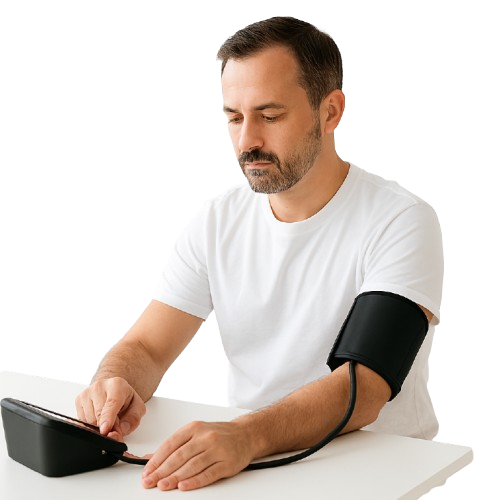
5 Common Errors in blood Pressure Measurement (Doctors’ Guide)

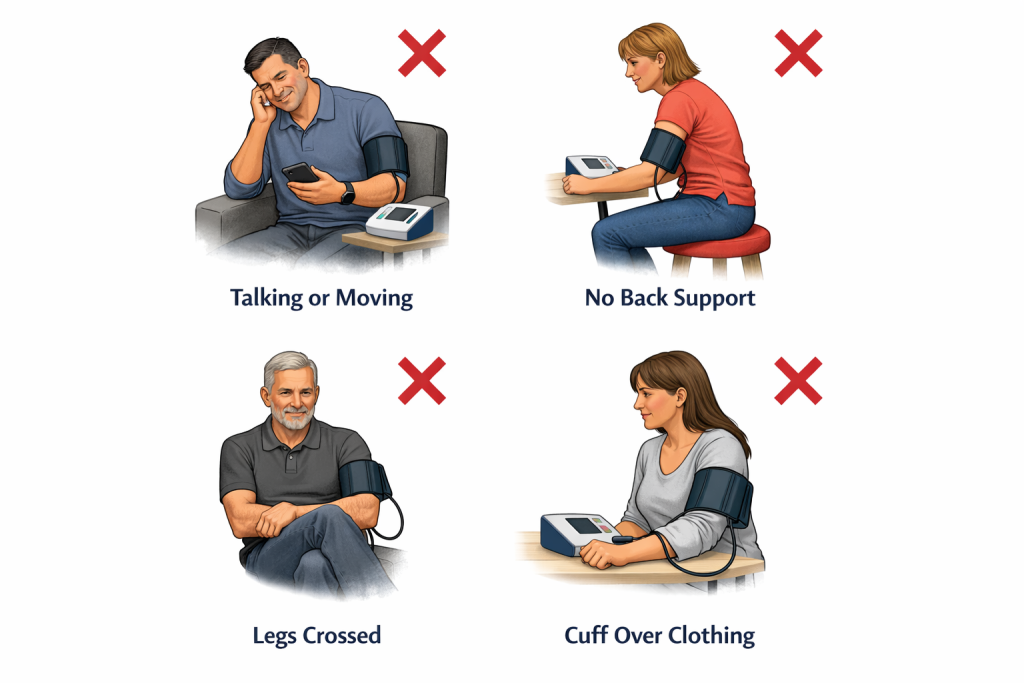
Errors in Blood Pressure Readings
Accurate blood pressure measurement depends on proper technique. Small mistakes can lead to misleading results that affect diagnosis and treatment. Common errors include:
- Talking During Measurement – even minor activity can raise readings.
- Poor posture – sitting without back support or crossing legs alters circulation.
- Incorrect arm position – the cuff must be at heart level for reliable results.
- Placing the Cuff Over Clothing– using a cuff over clothing or one that doesn’t fit properly messes numbers.
Avoiding these mistakes helps you get more accurate and reliable blood pressure readings, which in turn helps your medical practitioner make precise adjustments to your medications. These errors can range as high as 10–40 mmHg and may lead to unnecessary anxiety or even incorrect treatment.
Why Accurate Blood Pressure Measurement Matters
In my clinical practice, I often see patients come in worried about “high” readings they’ve taken at home. But when we repeat the measurement properly in the clinic about 3 times each 10 min apart, the numbers are sometimes completely normal.
The issue isn’t always hypertension; it’s often how the blood pressure was measured.
Even small errors of 5–10 mmHg can affect diagnosis and treatment decisions (Pickering et al., 2005). That’s why I’m writing this short article; to help out. Nailing a good technique is just as important as having a good device.
1. Talking During Measurement (“The Talker’s Penalty”)
It might seem harmless, but talking during a blood pressure reading can quickly raise your numbers.
When you speak, your body becomes more active, and your nervous system responds by increasing blood pressure. In some cases, this can raise readings by about 10 mmHg or more (Myers et al., 2010).
What to do:
Sit quietly for at least 5 minutes before measuring, and stay silent during the reading.
2. Incorrect Arm Position
Your arm position plays a bigger role than most people realize.
If your arm is hanging too low, gravity can make your blood pressure appear higher than it actually is; sometimes by 10–12 mmHg (Pickering et al., 2005).
What to do:
Rest your arm on a table so that the cuff is level with your heart.
3. Crossing Your Legs
Sitting with your legs crossed may feel comfortable, but it can affect your reading.
This position changes blood flow and can raise your blood pressure by about 8–10 mmHg (Peters et al., 1999).
What to do:
Keep both feet flat on the floor, with your legs uncrossed.
4. Measuring with a Full Bladder
This is a common but often overlooked mistake.
A full bladder puts stress on your body and can temporarily raise your blood pressure by 10–15 mmHg (Lee et al., 2011).
5. Placing the Cuff Over Clothing
This is one of the biggest sources of inaccurate readings.
Placing the cuff over your dress especially thick fabric can significantly distort your results, sometimes by as much as 40mmhg (Pickering et al., 2005).
What to do:
Always place the cuff directly on bare skin.
How to Measure Blood Pressure Correctly at Home
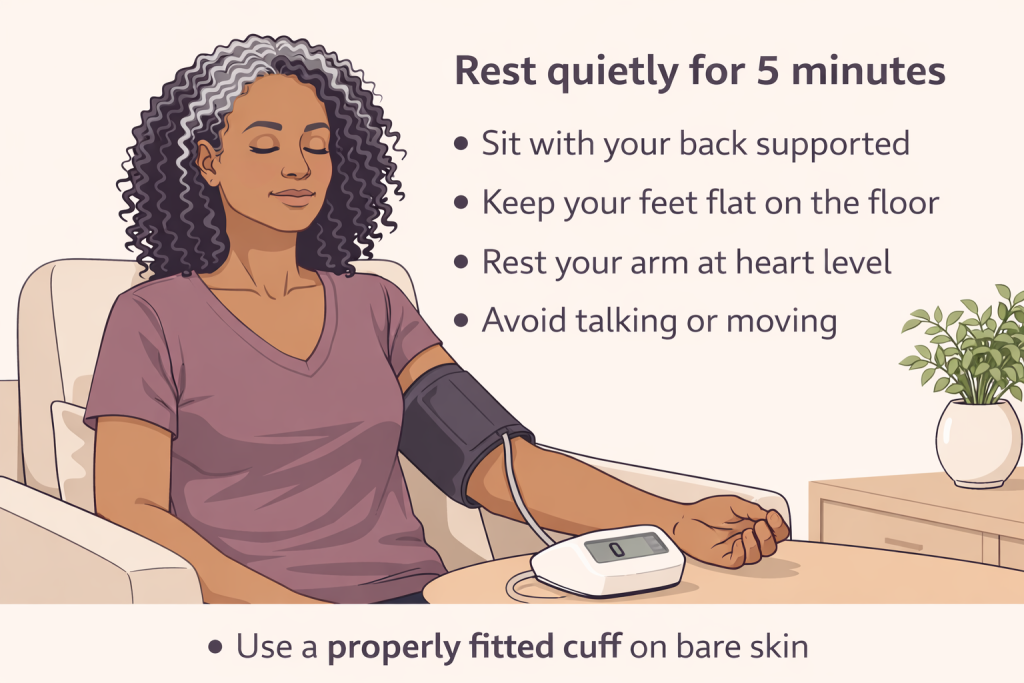
For the most reliable results, follow these simple steps:
- Rest quietly for 5 minutes
- Sit with your back supported
- Keep your feet flat on the floor
- Rest your arm at heart level
- Avoid talking or moving
- Use a properly fitted cuff on bare skin
Consistency is key. Try to measure your blood pressure at the same time each day.
Parts of the Body for Blood Pressure Measurement
Upper Arm (brachial artery)
The clinical gold standard for accuracy and recommended by guidelines. Upper-arm cuff readings best correlate with intra-arterial measurements and are used for diagnosing and managing hypertension (Pickering et al., 2005).
Wrist (radial artery)
Convenient for self-monitoring, but readings are prone to error if not kept at heart level. Validation standards are less strict compared to upper-arm devices
Finger (digital artery)
Rarely used for routine diagnosis; values are sensitive to movement, temperature, and device calibration, making them less reliable
Ankle (posterior tibial artery)
The Ankle-Brachial Index (ABI) is used to help detect peripheral artery disease (PAD). If the ankle blood pressure is lower than the arm’s, it might point to blocked or narrowed arteries in the legs. When measuring the arm isn’t possible; due to injury, surgery, or conditions that prevent placing a cuff on the upper arm; the ankle can be used instead. Since ankle pressures are usually higher than arm pressures, the results should always be interpreted in context. (Aboyans et al., 2012).
How Ankle Blood Pressure Is Measured
Ankle blood pressure is taken while you lie flat, with the leg at heart level. A wide cuff is wrapped around the ankle, just above the bone. Using a Doppler probe, the clinician listens for the pulse in the posterior tibial or dorsalis pedis artery. The cuff is inflated until the sound disappears, then slowly released; the pressure where the pulse returns is recorded as the ankle systolic pressure.
A Note on Natural Support
Accurate measurement is only one part of managing blood pressure. Lifestyle and diet also play an important role.
If you’re interested in natural supportive, evidence-based options like hibiscus flower health benefits, you can read more on hibiscus
📚 References
Pickering, T. G., Hall, J. E., Appel, L. J., Falkner, B. E., Graves, J., Hill, M. N., Jones, D. W., Kurtz, T., Sheps, S. G., & Roccella, E. J. (2005).
Recommendations for blood pressure measurement in humans and experimental animals. Hypertension, 45(1), 142–161.
Myers, M. G., Godwin, M., Dawes, M., Kiss, A., Tobe, S. W., Kaczorowski, J., & Grant, F. C. (2010).
Conventional versus automated measurement of blood pressure in primary care patients. Hypertension, 55(2), 195–200.
Choi EJ, Jeong DW, Lee JG, Lee S, Kim YJ, Yi YH, Cho YH, Im SJ, Bae MJ. The Impact of Bladder Distension on Blood Pressure in Middle Aged Women. Korean J Fam Med. 2011;32(5):306-310. doi: 10.4082/ kjfm.2011.32.5.306.
Peters, Grant L.; Binder, Sara K.; Campbell, Norm R.C.. The effect of crossing legs on blood pressure: a randomized single-blind cross-over study. Blood Pressure Monitoring 4(2):p 97-102, April 1999.
Aboyans, V., Criqui, M. H., McDermott, M. M., Allison, M. A., McPherson, K., Goff, D. C., … & American Heart Association Council on Peripheral Vascular Disease. (2012). Measurement and interpretation of the ankle-brachial index: A scientific statement from the American Heart Association. Circulation, 126(24), 2890–2909. https://doi.org/10.1161/CIR.0b013e318276fbcb
Medical Disclaimer
This content is for educational purposes only and does not replace professional medical advice. Always consult your healthcare provider before making changes to your treatment or medication.